
Insulation Company in March Air Force Base, CA
Blown in insulation is the most common retrofit we handle in March Air Force Base, and for good reason. Most homes in the 92551 ZIP sit on flat, sun-baked lots where attic temperatures climb past 140°F in summer, while the original mid-century insulation installed when these houses were built has settled, thinned, or broken down entirely. We work with GreenFiber and Owens Corning blown-in systems because they let us reach every corner of an attic without tearing out drywall. If your March Air Force Base home struggles to hold temperature, call Prairie Insulation Co at (855) 219-0368 for a free estimate.
Why March Air Force Base Homes Are Different
March Air Force Base sits in the flat, open terrain of the Inland Empire, where summer temperatures routinely exceed 100°F and the sun beats directly on rooftops from late morning until dusk. The housing stock here is dominated by mid-century military family housing and early Moreno Valley tract homes built between the 1950s and 1970s: wood-frame construction, stucco exteriors, and attic insulation that was thin even when it was new. Fifty or sixty years later, much of that original fiberglass or rock wool has compressed to a fraction of its rated R-value. We regularly find attics in March Air Force Base where the insulation barely covers the ceiling joists, which means the air conditioner works harder than it should and rooms at opposite ends of the house can feel like different climates. The wide-open former airfield terrain doesn’t help: wind sweeps across the base area and finds every gap in the building envelope. Retrofit work here isn’t about adding a little insulation on top of what’s there. It’s about rebuilding the thermal barrier from the attic floor up.
Our Main March Air Force Base Services
Two insulation services account for most of the calls we take from March Air Force Base homeowners. Attic insulation addresses the biggest heat gain problem these older homes face, while spray foam tackles the air sealing gaps that wind and extreme temperatures exploit.
Attic Insulation in March Air Force Base
Attic insulation in March Air Force Base starts with an honest look at what’s already up there, because in homes built during the base’s housing boom, that’s often original material that’s lost most of its effectiveness. We inspect for settled batts, gaps around recessed lights, and missing coverage over additions. Then we recommend a material that fits the job: blown-in fiberglass or cellulose for open attics, mineral wool where fire resistance matters, or a combination depending on what the space needs. The goal is a thermal barrier that holds up under 140°F attic temperatures. Read more on our Attic Insulation in March Air Force Base page.
Spray Foam Insulation in March Air Force Base
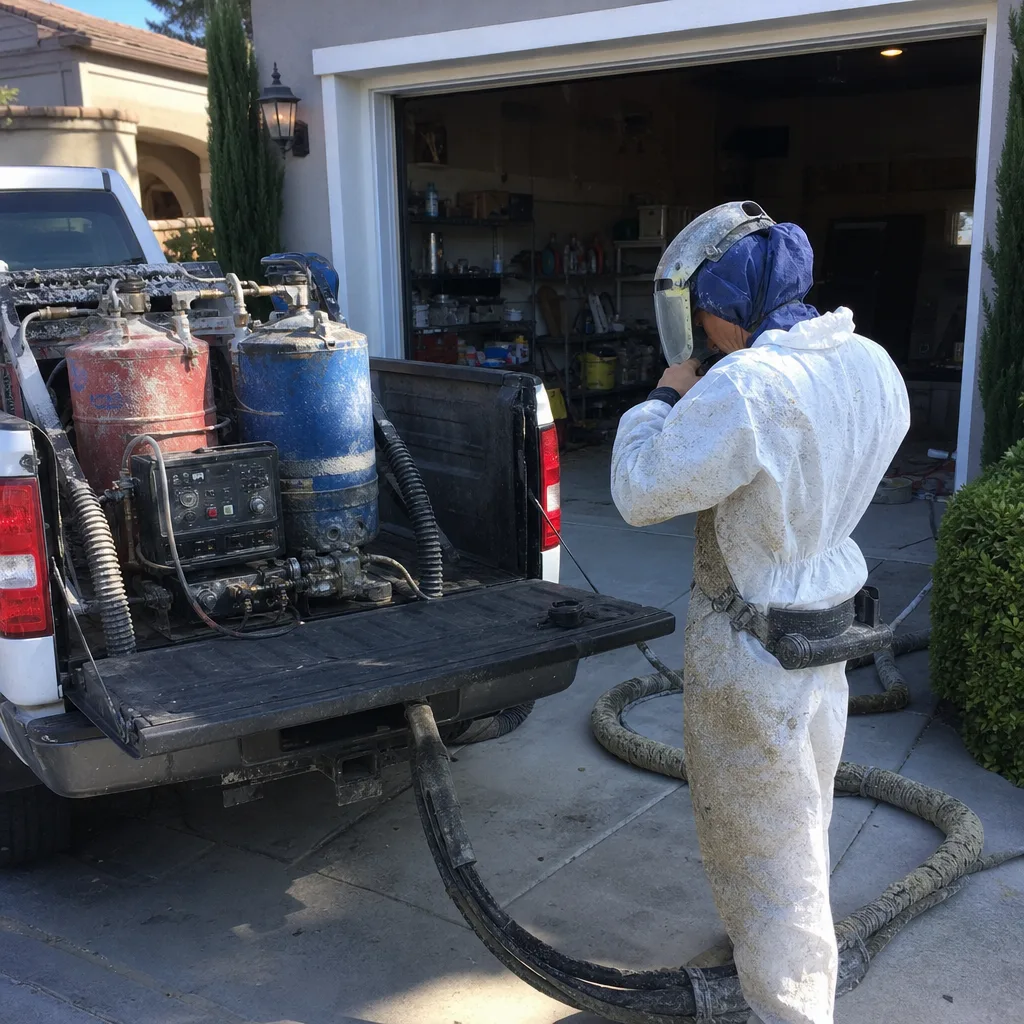
Spray foam works differently than batt or blown-in insulation, and in March Air Force Base that difference matters. Closed-cell spray foam creates an air barrier as well as an insulation layer, which helps keep the hot outside air where it belongs when summer temperatures top 100°F. We use Icynene and Demilec systems for homes that need both R-value and air sealing, particularly attics with ductwork running through unconditioned space. It’s a bigger investment than blown-in, but for the right house it solves multiple problems at once. Learn more on our Spray Foam Insulation in March Air Force Base page.
What happens when you call
- 1
A real person answersNo phone trees — you reach a local pro.
- 2
You get an upfront price rangeHonest numbers before anyone is dispatched.
- 3
A background-checked tech heads outLicensed & insured, dispatched right away.
- 4
You approve before work beginsNothing starts until you say go.
Blown In Insulation in March Air Force Base
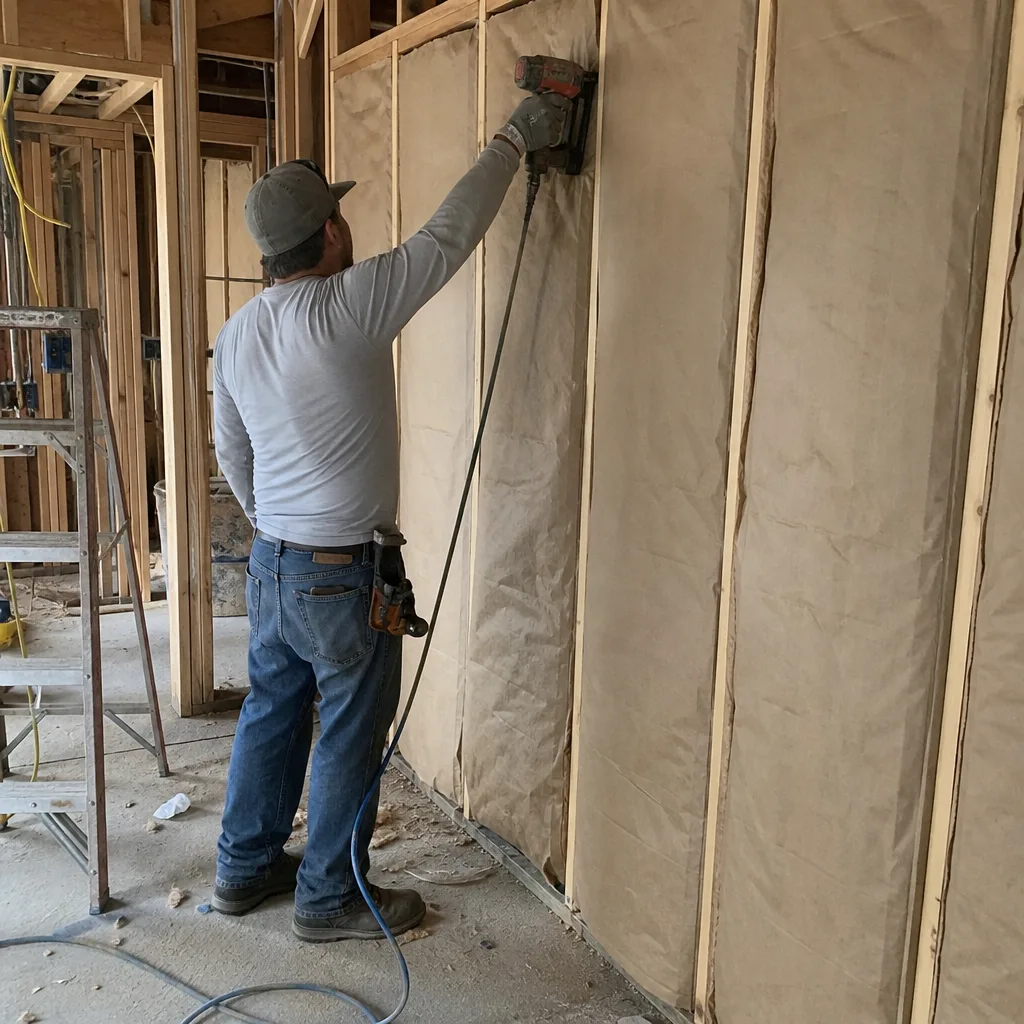
Blown in insulation is the workhorse retrofit for March Air Force Base homes because it conforms to existing attic spaces without requiring demolition. In these mid-century wood-frame houses, the attic floor is often irregular, with old wiring, recessed light housings, and framing that makes pre-cut batts a poor fit. Loose-fill fiberglass or cellulose settles into every cavity and covers everything evenly, which is exactly what a home needs when summer attic temperatures climb above 140°F and the existing insulation has compressed to almost nothing. We specify GreenFiber cellulose for homeowners who want a recycled-content product and Owens Corning fiberglass for those who prioritize moisture resistance. If you’re considering blown in insulation for your March Air Force Base home, our Blown In Insulation service page explains how we approach each job.
Cellulose Insulation
Signs you need it
Your attic insulation has settled below the top of the ceiling joists, or you can see bare spots where old insulation has shifted.
What it costs in March Air Force Base
Cellulose insulation in March Air Force Base typically runs $1.20 to $2.50 per square foot installed, depending on depth and R-value target.
How we do it
We seal air leaks at the attic floor, set depth markers to hit your target R-value, then blow GreenFiber cellulose through a hose until the layer reaches consistent coverage across the entire attic.
Blown In Attic Insulation
Signs you need it
Rooms on the top floor run noticeably warmer than the rest of the house, even with the air conditioner running.
What it costs in March Air Force Base
Blown in attic insulation in March Air Force Base typically costs $1.20 to $3.00 per square foot, with final pricing tied to the depth required and the material chosen.
How we do it
We remove any damaged or compressed old insulation where needed, air-seal around penetrations and top plates, then blow the specified material to the R-value your home needs for the Inland Empire climate.
Blown In Cellulose Insulation
Signs you need it
Your utility bills spike in summer, and the attic feels like an oven when you open the access hatch.
What it costs in March Air Force Base
Blown in cellulose insulation in March Air Force Base typically runs $1.20 to $2.50 per square foot installed, including material and labor.
How we do it
After air-sealing, we use a two-person team: one feeding the GreenFiber cellulose bales into the machine, one directing the hose to build even coverage at the specified depth.
Blown In Fiberglass Insulation
Signs you need it
The existing fiberglass batts are stained, compressed, or pulled back from the eaves so heat pours in around the edges of the attic.
What it costs in March Air Force Base
Blown in fiberglass insulation in March Air Force Base typically runs $1.20 to $3.00 per square foot, with the range driven by whether we’re adding to existing insulation or starting fresh.
How we do it
We install Owens Corning loose-fill fiberglass using calibrated equipment that controls fiber density, which prevents over-fluffing and ensures the R-value isn’t inflated.
Loose Fill Insulation
Signs you need it
You have hard-to-reach attic areas, knee walls, or irregular framing where batts can’t be installed properly.
What it costs in March Air Force Base
Loose fill insulation in March Air Force Base runs $1.20 to $3.00 per square foot depending on material, depth, and whether old insulation needs removal first.
How we do it
We clear debris, treat any moisture issues, air-seal the attic floor, then blow the loose fill into every cavity at a uniform depth measured against marked depth guides.
What Blown In Insulation Costs in March Air Force Base
| Item | Typical range in March Air Force Base |
|---|---|
| Blown in installation (material + labor) | $1.20 – $3.00 per sq ft |
| Cellulose insulation | $1.20 – $2.50 per sq ft |
| Blown in fiberglass insulation | $1.20 – $3.00 per sq ft |
Is blown in insulation worth it for an older March Air Force Base home?
Yes. Older March Air Force Base homes typically have R-11 to R-19 in the attic when R-38 to R-49 is recommended for the Inland Empire heat. Blown in insulation closes that gap quickly and usually pays for itself through lower cooling costs within a few summers.
How long does blown in insulation take in March Air Force Base?
Most March Air Force Base attic retrofits take one day, including setup and cleanup. Larger homes or jobs that require old insulation removal can stretch to two days. Call (855) 219-0368 to schedule a walkthrough.
Brands We Service in March Air Force Base
Prairie Insulation Co stocks and installs products from eight manufacturers, and for March Air Force Base jobs we commonly specify GreenFiber cellulose, Owens Corning fiberglass, Johns Manville batts, and Knauf products. Because we carry multiple lines, we match material to the house rather than forcing one brand. See our brands for the full portfolio.
Pricing for Insulation Company in March Air Force Base, CA
| Service | Typical range in March Air Force Base |
|---|---|
| Blown in insulation (material + labor) | $1.20 – $3.00 per sq ft |
| Cellulose insulation | $1.20 – $2.50 per sq ft |
| Blown in fiberglass insulation | $1.20 – $3.00 per sq ft |
| Loose fill insulation | $1.20 – $3.00 per sq ft |
| Attic air sealing + blown in | $1.50 – $3.50 per sq ft |
| Mineral wool batts | $1.80 – $3.50 per sq ft |
| Open-cell spray foam | $0.50 – $2.00 per board foot |
| Closed-cell spray foam | $1.00 – $3.00 per board foot |
What pushes the price up in March Air Force Base is usually what’s already in the attic: old, compressed insulation that needs removal, moisture damage around vents, or ductwork that has to be worked around or air-sealed. We quote upfront and the price we give is the price you pay. No surprise line items after the work starts.
Neighborhoods We Serve in March Air Force Base
We work throughout the 92551 ZIP code, including the base-adjacent housing areas and the older tract neighborhoods that grew up around the airfield. Response time for a free estimate is typically within one to two business days.
- Base family housing areas
- Neighborhoods north of Van Buren Boulevard
- Areas west of I-215 along Cactus Avenue
- Homes near Meridian Parkway
- Older Moreno Valley tract housing adjacent to the base
Service Area – Cities Near March Air Force Base
If you’re outside the base proper, we also cover the surrounding Inland Empire communities. We serve homeowners in Moreno Valley, CA, Woodcrest, CA, Perris, CA, and Good Hope, CA. Each of these areas has similar mid-century housing stock and the same hot, dry climate, so the retrofit approach carries over well.
Serving March Air Force Base, CA — Our Local Coverage Area
We’re based in the March Air Force Base area and know this community well. Use the map below to see our service coverage — if you’re nearby, we can almost certainly help.
FAQs About Insulation Company in March Air Force Base
We typically schedule estimates in March Air Force Base within one to two business days. Installation usually happens within a week or two after the estimate, depending on material lead times. Call (855) 219-0368 and we’ll get you on the schedule.
Most attic insulation retrofits don’t require a permit in March Air Force Base, but if your home is on base property, base housing office rules may apply. We’ll confirm what’s needed for your specific address before any work begins.
We handle attic insulation, blown-in, and spray foam, which covers the majority of a home’s energy-loss points. For crawl spaces or walls in March Air Force Base homes, we’ll assess whether spray foam or another method fits the structure. One crew does all of it.
If your March Air Force Base home is fighting the Inland Empire heat with thin, tired insulation, we’ll help you sort out the right material and the right thickness for the way your house was built. Call Prairie Insulation Co at (855) 219-0368 for a free, no-pressure estimate.
What happens when you call
- 1A real person answersNo phone trees — talk to a local insulation pro.
- 2You get an upfront price rangeHonest numbers before anyone is dispatched. No surprises.
- 3A background-checked tech heads outLicensed & insured, typically within 30–60 min.
- 4You approve before work beginsNothing starts until you say go.
What March Air Force Base Customers Say
"Plastic laid from the front door to the attic hatch and they vacuumed the hallway afterward."
— Carmen Guzman"Installed baffles at the soffits so the new insulation didn't block the ventilation, which the previous contractor apparently never considered."
— Neil Padgett"Work is good and the house is noticeably more comfortable. There was insulation debris left in the hall closet under the attic access that I had to clean up."
— Diego Morales