
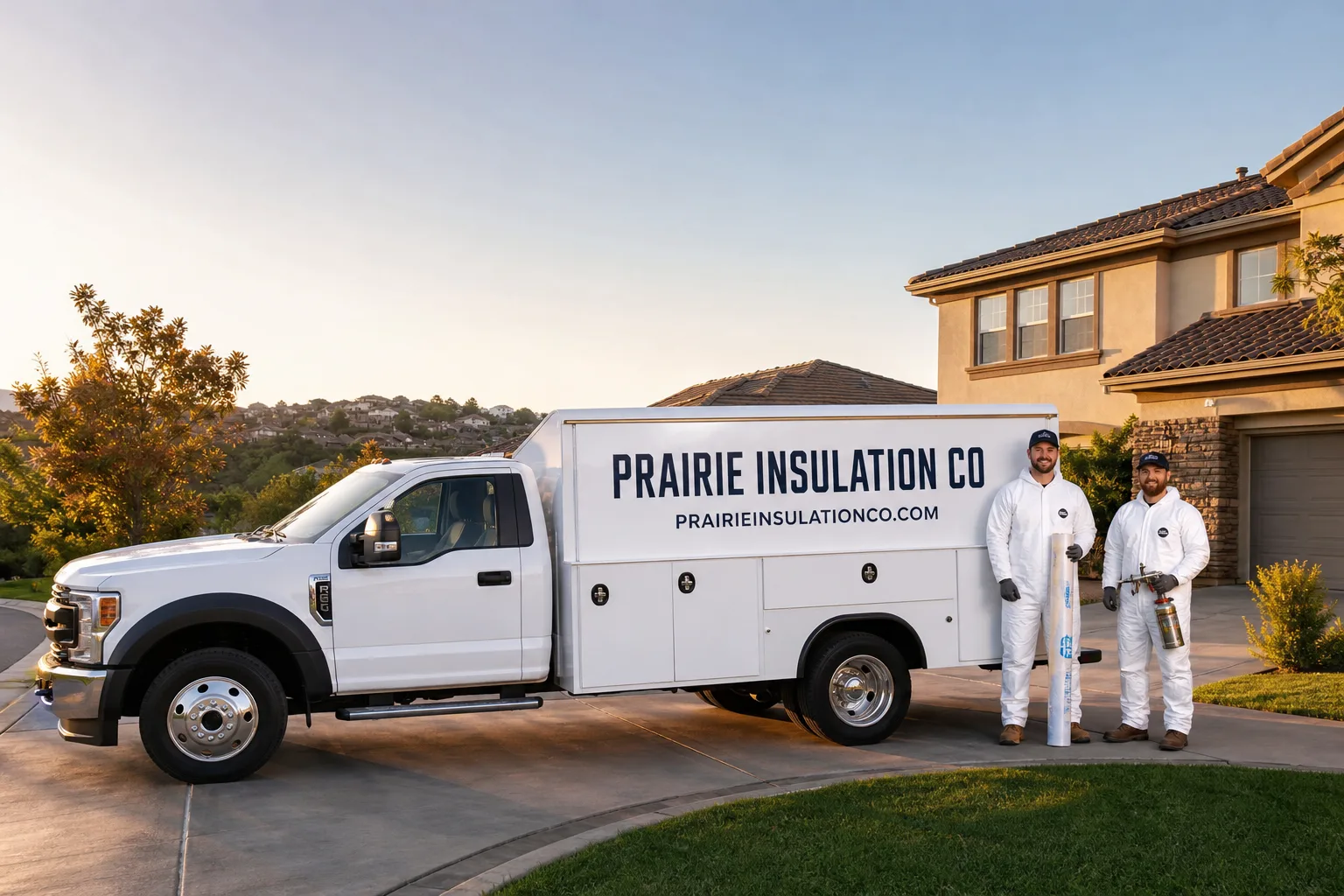
Fast, Reliable Attic Insulation Across March Air Force Base
Attic insulation in March Air Force Base costs $1.05 – $2.80 per square foot depending on material and method, with most mid-century base-era homes running $1,400 – $3,400 for a complete blown-in retrofit. We install attic insulation, spray foam, and blown-in systems for residential customers throughout ZIP 92551, and we can typically reach homes near the base within 24 – 48 hours for an estimate. If you’re noticing upstairs rooms that won’t hold temperature or attic heat bleeding into your living space, call us at (855) 219-0368. Our crew knows the aging military housing stock around March Air Force Base, and we’ll give you a straight assessment, not a sales pitch.
Why Prairie Insulation Co Is March Air Force Base’s Preferred Attic Insulation Company
Homes in March Air Force Base present a different set of problems than newer tract builds across the Inland Empire. The mid-century base housing and early Moreno Valley homes around ZIP 92551 were built with thin R-11 or R-13 batts, wood-frame ceilings, and minimal air-sealing. Years of 140°F attic temperatures bake that insulation down to a dusty mat with almost no thermal resistance left. We’ve spent years working inside these specific attics, and we understand how the flat, sun-baked terrain around the former airfield accelerates insulation failure faster than shaded neighborhoods in Woodcrest or Perris.
Ken Sobecki built Prairie Insulation Co around a simple principle: no single insulation product does everything. That’s why we stock and install materials from eight manufacturers including Owens Corning, Johns Manville, and Rockwool rather than pushing one brand on every job. For a thin-walled 1960s military family home near the base, we might specify blown-in GreenFiber cellulose to fill irregular cavities and air-seal gaps. For a homeowner dealing with noise from flight operations or nearby road traffic, Rockwool’s density gives you sound attenuation standard fiberglass can’t match.
Our customers in March Air Force Base appreciate that we’re not a generalist contractor trying to upsell HVAC or roofing work. We insulate attics. That’s the job, and we know it inside and out. Estimates are free, and we’ll tell you honestly whether a top-up, a full replacement, or an air-sealing retrofit makes sense for your situation.
Attic Cleaning Services in March Air Force Base
Attic Cleaning Services in March Air Force Base address a problem most homeowners never see until something goes wrong: decades of dust, pest debris, deteriorated insulation fibers, and blocked soffit vents that choke airflow and hold heat against your ceiling. On homes near the former airfield, wind-blown grit and the fine dust from disintegrating batt insulation accumulate quickly, and attic cleaning becomes a necessary prep step before any new insulation goes in. A typical attic cleaning in March Air Force Base runs $450 – $900 depending on attic size and debris volume, with deeper contamination or pest-dropping removal pushing toward the upper end.
Pre-Insulation and Contamination Cleanup
When our crew opens an attic in March Air Force Base’s base-era housing, we regularly find the original insulation has turned to powder and mixed with decades of accumulated dust. That material has to come out before new insulation goes in, otherwise you’re burying a problem instead of fixing it. Our cleaning process includes removal of failed insulation, debris extraction, and a full surface prep so the new material can perform at its rated R-value.
Soffit Vent and Airflow Restoration
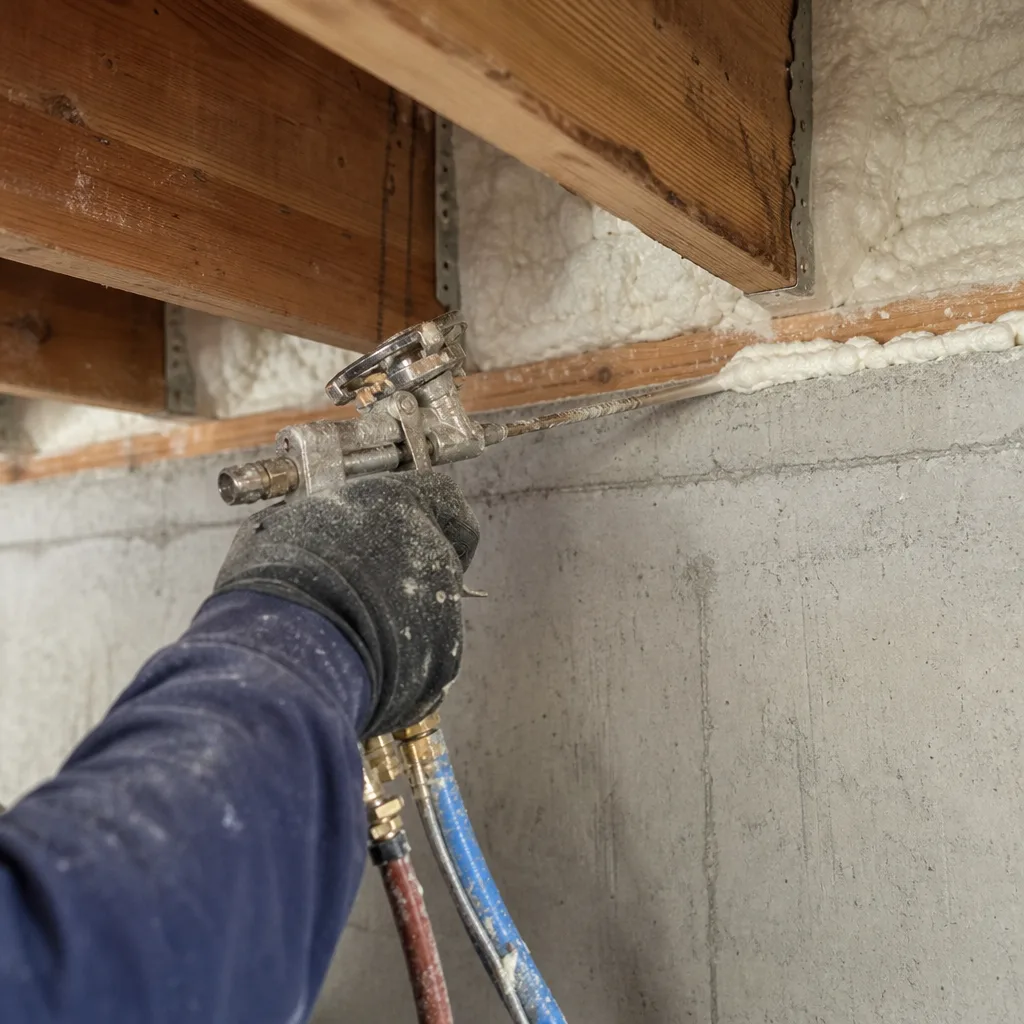
Packed dust and old batt fibers block soffit vents and starve the attic of needed airflow. On wind-swept flat lots near March Air Force Base, this happens faster than in hilly or shaded neighborhoods. Clearing those vent paths restores the air exchange that keeps attic temperatures lower and prevents moisture from condensing on the underside of your roof deck.
What happens when you call
- 1
A real person answersNo phone trees — you reach a local pro.
- 2
You get an upfront price rangeHonest numbers before anyone is dispatched.
- 3
A background-checked tech heads outLicensed & insured, dispatched right away.
- 4
You approve before work beginsNothing starts until you say go.
Attic Mold Removal in March Air Force Base
Attic Mold Removal in March Air Force Base typically runs $1,200 – $3,800 depending on the extent of the growth, the attic’s square footage, and whether the contamination is surface-level or embedded in the insulation and framing. Mold takes hold in attics when warm, moist air from the living space leaks upward through unsealed top plates, recessed can lights, or old duct chases and condenses on the cooler roof sheathing. In older base-era housing around ZIP 92551, inadequate or deteriorated insulation accelerates this cycle by letting conditioned air escape and cold surfaces form.
Source Correction, Not Just Surface Treatment
Treating visible mold without fixing the airflow and air-sealing problems that caused it just means you’ll be treating it again next year. We remove contaminated insulation, treat the affected framing, and correct the underlying ceiling-plane leaks so the moisture stops coming. That sequence is the only way mold removal actually holds in a March Air Force Base attic.
Moisture and Insulation Replacement
Once mold remediation is done, the insulation that trap moisture has to go. We replace it with material specified for the specific conditions in your attic, whether that’s blown-in cellulose that fills irregular cavities or Rockwool batts with natural moisture resistance in problem areas. The result is an attic that stays dry, breathes correctly, and holds temperature properly again.
Trusted Brands We Service in March Air Force Base
We install materials from eight insulation manufacturers, which means we’re not limited to whatever one brand happens to sell. For March Air Force Base customers, that matters because different houses need different things. A 1950s military family home with open cavities and uneven framing might get Owens Corning blown-in fiberglass for gap-filling density. A homeowner who wants real fire resistance and soundproofing near the base could be better served by Rockwool mineral wool. Our client Attic Insulation team keeps materials for Johns Manville and Knauf systems on hand, so we can move quickly once the scope is set. Eight brands, one crew.
Common Attic Insulation Problems We See in March Air Force Base Homes
- Baked-down batt insulation. The original R-11 or R-13 batts in 1950s – 70s base housing compress and disintegrate under sustained 140°F+ attic heat. What’s left has a fraction of its original R-value, and the ceiling plane leaks heat year-round.
- Air-sealing failures at top plates and recessed lights. Thin-wall retrofit attics in March Air Force Base lose conditioned air through unsealed penetrations. Even after new insulation is added, these gaps pump heat into the attic and pull hot air back down into the living space.
- Blocked soffit vents from degraded insulation. Dusty batt fibers and wind-blown grit clog the intake vents that keep attics breathing. Starved airflow makes the 140°F problem worse and shortens the life of any new insulation installed.
- Radiant heat gain through unshielded decking. Flat, shadeless lots near the former airfield let the sun pound the roof deck all day. Without a radiant barrier, new insulation still can’t fully stop the heat transfer during peak summer afternoons.
Pricing for Attic Insulation in March Air Force Base, CA
Blown-in attic insulation in March Air Force Base runs $1.05 – $1.85 per square foot for fiberglass or cellulose, while spray foam runs $2.20 – $2.80 per square foot depending on open- or closed-cell chemistry. Attic batt insulation typically falls between $1.00 – $1.60 per square foot. An attic insulation top-up on a standard 1,200-square-foot attic in ZIP 92551 is usually $850 – $1,500, while a full removal, air-sealing, and blown-in replacement lands closer to $2,400 – $3,400. The biggest cost drivers are attic accessibility, whether old insulation needs removal first, and whether we’re adding a radiant barrier to handle the direct solar load. Call (855) 219-0368 for a free estimate and we’ll give you an exact number before any work begins.
We Also Serve Cities Near March Air Force Base
Our team handles Attic Insulation in March Air Force Base and the surrounding communities, including Moreno Valley, Woodcrest, Perris, and Good Hope. If you’re in one of these areas and dealing with an attic that won’t hold temperature, call (855) 219-0368 and we’ll get you on the schedule. We know the housing stock across the Inland Empire, from base-era ranch homes to newer tract development.
Serving March Air Force Base, CA — Our Local Coverage Area
We’re based in the March Air Force Base area and know this community well. Use the map below to see our service coverage — if you’re nearby, we can almost certainly help.
FAQs About Attic Insulation in March Air Force Base
March Air Force Base’s flat, open, wind-swept terrain has almost no shade, so roof decks absorb sun all day and attic temperatures routinely spike past 140°F in summer. That sustained heat breaks down the thin fiberglass batts installed in 1950s – 70s military housing far faster than it affects the newer, thicker insulation in Moreno Valley tracts built decades later. The older homes also have less attic depth to start with, so there’s less material to degrade before performance drops noticeably. If your base-era attic hasn’t been touched since original construction, you’re almost certainly running far below today’s recommended R-values. Call (855) 219-0368 and we’ll inspect it and give you an honest read.
In most March Air Force Base homes built before 1980, the original batt insulation is too degraded to salvage, but a full tear-out isn’t always necessary. If the existing material is dry, mostly intact, and free of mold or pest contamination, we can blow additional insulation over the top to reach modern levels. If the old batts have baked down to a dusty mat or are blocking soffit airflow, removal and full replacement gives you a much better result. We’ll tell you which path fits your attic after a free inspection. Call (855) 219-0368 to schedule one.
For March Air Force Base’s climate, we typically specify R-38 to R-49 for attic floors in older single-story homes, up from the original R-11 or R-13 many of these houses were built with. The Department of Energy recommends R-49 for this zone, and for low-slope ranch homes with big roof surface and minimal shade, erring toward the higher end pays off in comfort. The right number depends on your ceiling plane’s condition, existing air-sealing, and whether a radiant barrier will be part of the scope. We’ll give you a specific recommendation after looking at the attic.
In most March Air Force Base attics we see, a radiant barrier makes a meaningful difference because the homes sit on flat, shadeless lots and the roof deck takes direct sun from morning to evening. Radiant barrier blocks radiant heat transfer before it reaches the insulation, which keeps the attic cooler and reduces the load on your air conditioning. It’s not required for every home, but for base-era ranch houses with unshielded decks and summer attic temps over 140°F, we usually recommend it. Call (855) 219-0368 for a scope and cost breakdown specific to your roof.
Book attic mold removal if you see visible dark staining on roof sheathing or rafters, smell musty air near the attic access, or notice ceiling discoloration in rooms below the attic. A standard attic cleaning is enough when the problem is dust, debris, and deteriorated insulation with no visible mold. If you’re not sure what you’re dealing with, don’t guess: we’ll inspect and tell you exactly which service fits. Reach us at (855) 219-0368 and we’ll come out for a free assessment.
If you’re ready to stop fighting an attic that won’t hold temperature, call Prairie Insulation Co at (855) 219-0368 for a free estimate. We service March Air Force Base, CA and the surrounding Inland Empire, and we’ll give you a straight answer on what your attic needs. Ken Sobecki and our crew are ready to help.
Written by Ken Sobecki, Owner at Prairie Insulation Co, serving March Air Force Base and the Inland Empire.