
Insulation Company in Long Beach, CA
Most Long Beach homes need blown-in insulation that handles moisture first and temperature second. The coastal marine layer keeps humidity high year-round, and homes built before 1950 often have no wall insulation at all, just empty stud cavities with damp air moving through them. That’s why we start every Long Beach insulation job by checking air sealing and vapor control before we add material. If your rooms won’t hold temperature and your energy bills climb every summer, call Prairie Insulation Co at (855) 219-0368.
Why Long Beach Homes Are Different
Long Beach sits directly in a coastal fog belt. The marine layer rolls in most nights and burns off by mid-morning, which means exterior walls stay damp for hours at a time and interior air never really dries out. In neighborhoods like Alamitos Beach and Belmont Shore, we regularly find condensation on interior stucco walls during cool mornings, especially where ocean air meets original single-pane windows and uninsulated wall cavities. Add insulation without addressing that moisture and you create the perfect conditions for mold inside the wall.
The housing stock compounds the problem. The 1920s through 1940s bungalows and Craftsman homes across 90802, 90803, and 90804 were built with single-wall construction or minimal framing, no sheathing, and no vapor barriers. Knob-and-tube wiring is common in those homes, which means blown-in insulation requires careful placement around electrical runs. The 1950s and 60s tract homes in 90805 and 90806 have different issues: some have partial batt insulation that settled or was never installed correctly in the first place. Every Long Beach insulation retrofit has to solve the moisture equation before the thermal one.
That’s why we specify materials differently here than we would for an inland city like Riverside or Temecula. Cellulose and mineral wool manage moisture better than fiberglass in damp conditions. Closed-cell spray foam earns its cost in Long Beach because it acts as its own vapor barrier. No single product does everything, and the right insulation for a Belmont Shore bungalow is not the same as the right insulation for a Lakewood tract home.
Our Main Long Beach Services
Long Beach homeowners call us most about two things: attic insulation that has settled or failed and spray foam for walls and rim joists where air leaks are driving their energy bills. Each job starts with the same question: where is the moisture going to go?
Attic Insulation in Long Beach
Long Beach attics trap humid marine air, and when that air meets cold air-conditioned ceilings, condensation forms on the underside of the roof deck. Older homes in 90814 and 90815 often have gable vents but no ridge vents or soffit intake, so the attic never breathes. We check ventilation and air sealing before recommending R-value. Knob-and-tube wiring in pre-war attics requires specific clearance protocols before any insulation touches the ceiling plane. Read more about how we handle Attic Insulation in Long Beach.
Spray Foam Insulation in Long Beach
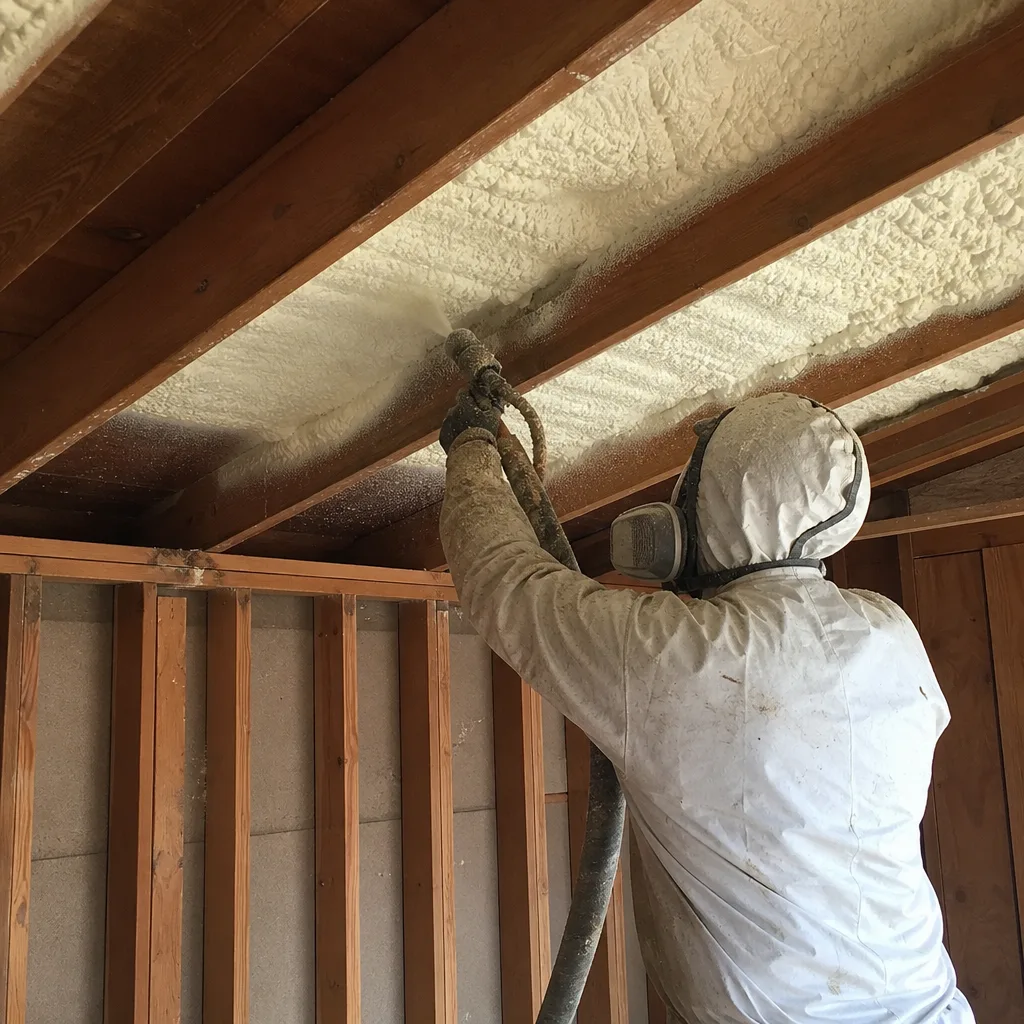
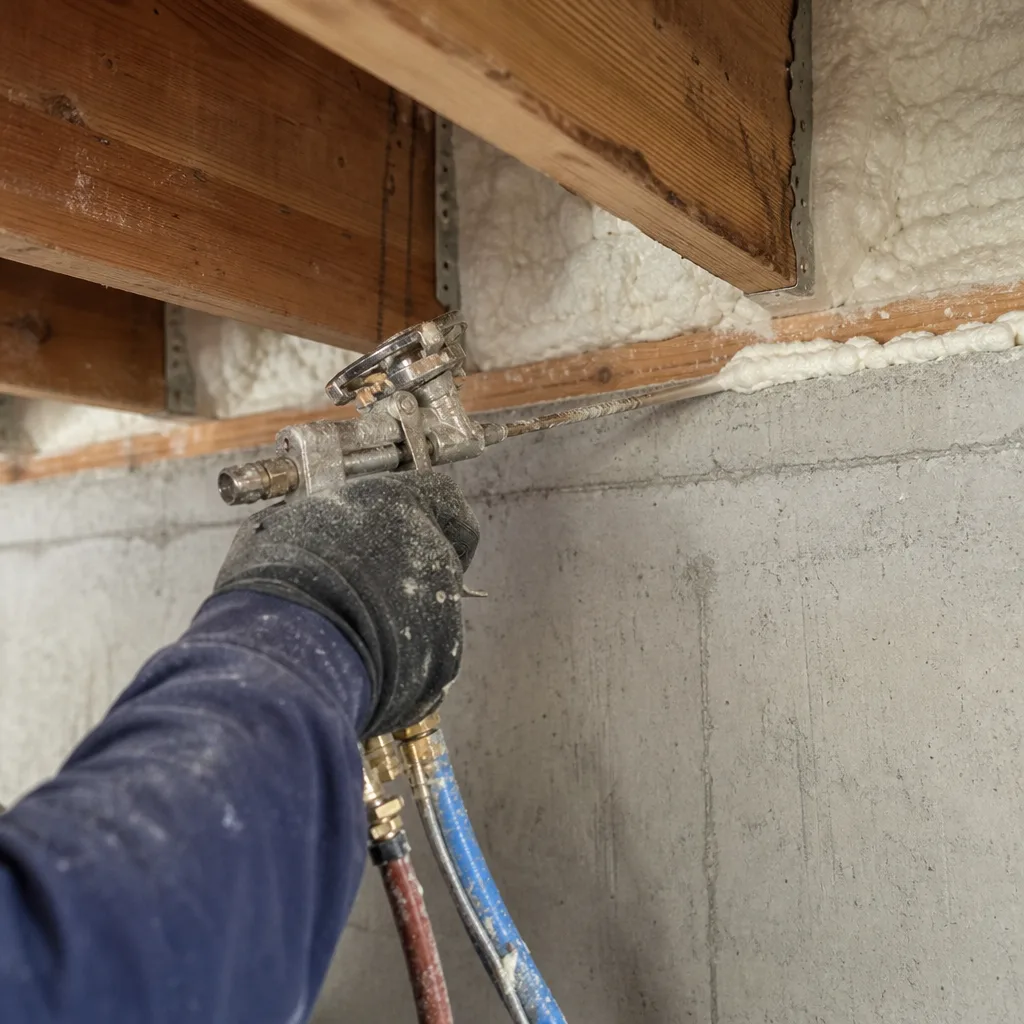
Spray foam solves a specific Long Beach problem: interior condensation on cold surfaces. Open-cell foam fills stud cavities in old stucco walls and slows air movement enough to stop that morning dampness. Closed-cell foam from Icynene or Demilec works where water intrusion is a real risk, like low-lying homes near the Los Cerritos Channel or marine-adjacent properties in 90803. We install both systems and specify based on the wall assembly, not a brand preference. See Spray Foam Insulation in Long Beach for the full breakdown.
What happens when you call
- 1
A real person answersNo phone trees — you reach a local pro.
- 2
You get an upfront price rangeHonest numbers before anyone is dispatched.
- 3
A background-checked tech heads outLicensed & insured, dispatched right away.
- 4
You approve before work beginsNothing starts until you say go.
Blown In Insulation in Long Beach
Blown-in insulation is the most practical retrofit for Long Beach’s older homes because it fills irregular stud bays and attic cavities without gutting walls. In the 1920s bungalows of 90802 and 90803, original walls often have no insulation at all, and blown-in cellulose gives us a way to add thermal resistance and air resistance without tearing out plaster. The catch in Long Beach is always moisture: we air-seal and address vapor movement before we blow anything in, otherwise the marine humidity will find its way into the new insulation and create condensation inside the cavity. That’s the difference between a retrofit that works and one that causes mold, and it’s why we treat Blown In Insulation as a moisture-control project first.
Blown In Attic Insulation
Signs you need it
Rooms directly under the attic stay hot in summer and cold in winter while the rest of the house holds temperature fine.
What it costs in Long Beach
Blown-in attic insulation in Long Beach typically runs $1.50 to $3.50 per square foot depending on depth, existing material, and whether we’re air-sealing the attic plane first.
How we do it
We remove or top-dress existing material, seal penetrations and bypasses, verify ventilation, then blow insulation to the specified depth with baffles protecting eave vents.
Blown In Cellulose Insulation
Signs you need it
Old batt insulation in the attic is compressed, damp, or settled below the top of the joists and no longer performing.
What it costs in Long Beach
Cellulose blow-in costs more up front than fiberglass, usually $1.50 to $3.00 per square foot, because the material includes borate treatment that resists moisture and pests.
How we do it
We dense-pack or loose-fill GreenFiber cellulose through hoses into attics and walls, cutting small access holes in wall cavities when needed and patching them after.
Blown In Fiberglass Insulation
Signs you need it
You want attic insulation on a tighter budget and the attic plane is dry enough that fiberglass’s lack of moisture buffering won’t matter.
What it costs in Long Beach
Blown-in fiberglass in Long Beach runs $1.00 to $2.50 per square foot installed, making it the most economical attic retrofit we offer.
How we do it
We calibrate the blowing machine for the target R-value, blow Owens Corning or Johns Manville fiberglass to an even depth, and leave a written depth map for your records.
Loose Fill Insulation
Signs you need it
Your attic has hard-to-reach corners, shallow joist bays, or existing insulation that needs topping off rather than full replacement.
What it costs in Long Beach
Loose fill in Long Beach ranges from $1.00 to $3.00 per square foot depending on depth and whether we’re removing old material first.
How we do it
We use a blowing machine to distribute loose material evenly across the attic floor, building to a consistent depth that meets the R-value we specified after checking your roof assembly.
What Blown In Insulation Costs in Long Beach
| Item | Typical range in Long Beach |
|---|---|
| Blown-in attic insulation (fiberglass) | $1.50 – $3.50 per sq ft |
| Blown-in cellulose (GreenFiber) | $1.50 – $3.00 per sq ft |
| Loose fill top-off or full attic | $1.00 – $3.00 per sq ft |
How long does blown-in insulation last in Long Beach’s humid climate?
Cellulose typically lasts 20 to 30 years if the attic stays dry, but humidity shortens its life if air sealing is skipped. Call (855) 219-0368 and we’ll tell you honestly what your attic needs.
Can you blow insulation into walls without removing drywall in Long Beach?
Yes. We drill small access holes through stucco or siding, blow material into stud cavities, then patch. The holes are about 2 inches across and we match the exterior finish.
Brands We Service in Long Beach
We install and service insulation from Owens Corning, Johns Manville, Knauf, and Rockwool, among others. Blown-in materials and spray foam components are stocked locally for Long Beach jobs, which means we can usually start within days of your estimate. See our brands for the full portfolio.
Pricing for Insulation Company in Long Beach, CA
| Service | Typical range in Long Beach |
|---|---|
| Blown-in attic insulation (fiberglass) | $1.50 – $3.50 per sq ft |
| Blown-in cellulose (GreenFiber) | $1.50 – $3.00 per sq ft |
| Loose fill top-off or full attic | $1.00 – $3.00 per sq ft |
| Attic air sealing before insulation | $800 – $2,500 per attic |
| Wall cavity blow-in retrofit | $2.00 – $4.50 per sq ft |
| Open-cell spray foam (attic or walls) | $0.44 – $1.50 per board ft |
| Closed-cell spray foam (Icynene/Demilec) | $1.00 – $3.50 per board ft |
| Rockwool batt installation | $1.50 – $4.00 per sq ft |
What pushes Long Beach prices up is access and prep work: knob-and-tube wiring that needs clearance, damp attics that need ventilation fixes first, and single-wall construction that demands more air sealing before insulation goes in. We’ll give you an upfront price after we inspect, and that’s the number you pay unless something hidden changes the scope, which we’ll flag before any work starts.
Neighborhoods We Serve in Long Beach
We work across Long Beach, from the beachside bungalows of Belmont Shore and Alamitos Beach to the tract homes of Los Altos, Bixby Knolls, and El Dorado Park. Most neighborhoods see us within two to three business days for an estimate.
- Belmont Shore
- Alamitos Beach
- Bluff Heights
- Bixby Knolls
- Los Altos
Service Area – Cities Near Long Beach
Our Long Beach crew also covers nearby communities in the same coastal climate zone. We serve Signal Hill, CA, Lakewood, CA, Los Alamitos, CA, and Rossmoor, CA, each with the same moisture-first approach we use in Long Beach.
Serving Long Beach, CA — Our Local Coverage Area
We’re based in the Long Beach area and know this community well. Use the map below to see our service coverage — if you’re nearby, we can almost certainly help.
FAQs About Insulation Company in Long Beach
Most Long Beach neighborhoods get an estimate within two to three business days. If you’re in 90802, 90803, or 90814, we can often schedule sooner because our crews are already working those ZIPs regularly. Call (855) 219-0368 and we’ll give you a same-week slot when possible.
Most retrofits don’t require a city permit, but older homes with knob-and-tube wiring may need an electrical inspection before insulation touches those walls. We’ll tell you at the estimate if your project falls into that category and what the path looks like.
Yes. Wall blow-in access holes go through stucco or siding, not interior plaster. For attics, we work from the top side, so your plaster ceilings stay untouched. Original lath-and-plaster walls hold up fine when we dense-pack carefully.
Need insulation in Long Beach? Call Prairie Insulation Co at (855) 219-0368 for a free estimate. We’ll tell you what your home actually needs, and we’ll install the right material for the job, not the one we happen to stock.
What happens when you call
- 1A real person answersNo phone trees — talk to a local insulation pro.
- 2You get an upfront price rangeHonest numbers before anyone is dispatched. No surprises.
- 3A background-checked tech heads outLicensed & insured, typically within 30–60 min.
- 4You approve before work beginsNothing starts until you say go.
What Long Beach Customers Say
"Installed baffles at the soffits so the new insulation didn't block the ventilation, which the previous contractor apparently never considered."
— Neil Padgett"Work is good and the house is noticeably more comfortable. There was insulation debris left in the hall closet under the attic access that I had to clean up."
— Diego Morales"Attic was at maybe R-11 from the 1970s and blown in over the top would have just buried the problem. They removed the old material, air sealed the top plates and penetrations first, then blew in to R-49. The upstairs is a completely different house in August."
— Kurt Thompson