
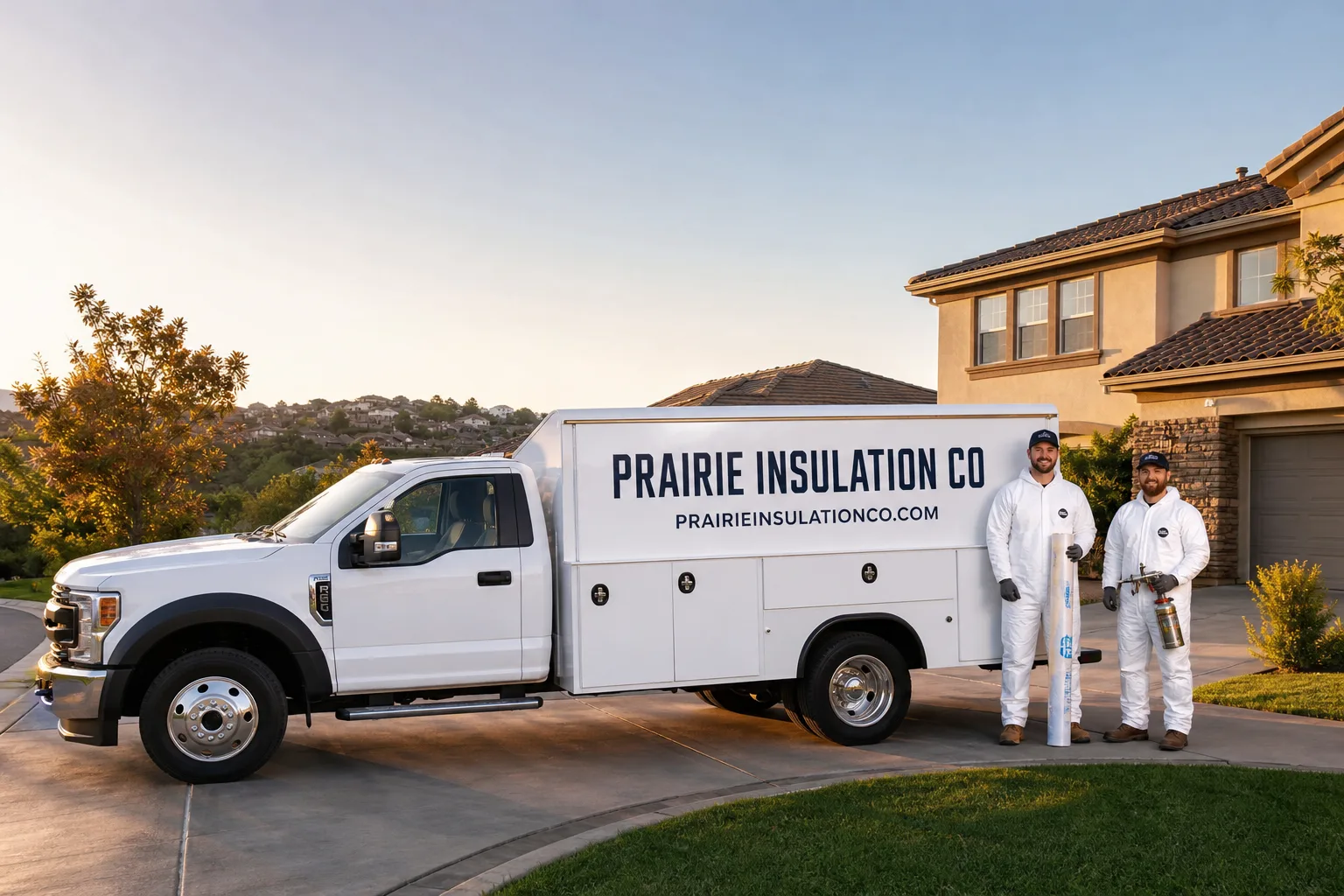
Fast, Reliable Spray Foam Insulation Across Woodcrest
Spray foam insulation in Woodcrest is the highest-performance retrofit you can put in a home with big west-facing walls and a vented attic that bakes all summer. Most 92508 homes were built between 1980 and 2005 with builder-grade R-11 to R-19 batts that have settled, compressed, or pulled away from the top plates. We see it on nearly every semi-custom ranch and horse-property home we assess out here. If your back bedrooms run 8 to 12 degrees hotter than the rest of the house from June through September, spray foam is usually the fix, not a new AC system. Call (855) 219-0368 and we’ll come out, inspect the wall cavities and attic, and show you exactly where the heat is getting in before we recommend anything.
Why Prairie Insulation Co Is Woodcrest’s Preferred Spray Foam Insulation Company
Ken Sobecki built Prairie Insulation Co around a simple idea: no single insulation product does everything, so a contractor who only installs one brand can’t give you the right answer every time. We install spray foam systems from both Icynene and Demilec, and we stock Johns Manville, Knauf, Rockwool, and CertainTeed products for the jobs where foam isn’t the right call. That matters in Woodcrest because the right fix for a 1990s ranch with a hot rear addition is often different from the right fix for a newer tract home near March Air Force Base.
Our crews know Woodcrest’s roads and building patterns. We schedule jobs off Washington Street and Van Buren Boulevard all the time, and we know what a Mockingbird Canyon Road property looks like inside its walls. When you call us, you get a straight answer about whether spray foam will solve your specific problem or whether a hybrid approach with Rockwool batt and a Reflectix repair in Woodcrest makes more sense. That’s the whole point of carrying eight brands: we recommend what the house needs, not what we happen to have on the truck.
Key Takeaways:
- We’re material-agnostic. Spray foam from Icynene or Demilec is one option among several we install.
- Ken Sobecki and our crew work Woodcrest properties weekly, not occasionally.
- Free estimates. We show up, measure, inspect, and give you a written number.
- Licensed and insured. Upfront pricing on every job.
Read more about Spray Foam Insulation as a whole-home solution, or keep reading for how it applies specifically to Woodcrest homes.
Spray Foam Attic Insulation in Woodcrest
Spray foam attic insulation in Woodcrest is the highest-impact upgrade for most homes in the 92508 zip code, and it’s the first thing we look at when a homeowner tells us their rear bedrooms are roasting. On a typical July afternoon, your vented attic can hit 150°F or more. That heat radiates down through the ceiling drywall all evening, and if your builder-grade batts have settled or been pushed around by stored boxes, there’s nothing stopping it. We find crushed R-19 batts under Christmas decorations, flattened insulation under plywood walkways, and batts blown back from the eaves by attic fans on nearly every assessment. Spray foam applied to the attic floor or the roof deck creates an air barrier that stops that radiant heat before it reaches your living space.
Roof Deck Application
For vented attics with ductwork running through them, spraying closed-cell foam directly on the underside of the roof deck brings the ductwork into the conditioned envelope. That matters in Woodcrest because duct runs across a 150°F attic lose a significant chunk of their cooling capacity before the air ever reaches the register. A sealed roof deck attic typically runs 15 to 20 degrees cooler than a vented one, and closed-cell Demilec gives you both the air seal and the vapor control in one pass.
Attic Floor Air Sealing
On homes where the attic isn’t used for storage, we air-seal every top plate, plumbing penetration, and wire chase, then apply open-cell foam to the attic floor. This is the less expensive option and it works well when the attic has no ductwork. In Woodcrest’s 92508 housing stock, that’s common on 1980s single-story ranches where the HVAC system sits in a hallway closet and blows through ceiling registers. Expect a typical 1,800-square-foot ranch to run $4,800 to $7,500 for a full attic floor air seal and open-cell application.
Spray Foam Wall Insulation in Woodcrest
Spray foam wall insulation in Woodcrest targets the exact problem that plagues west-facing rear additions and converted garages on large-lot semi-custom properties. Stucco-clad wood-frame walls absorb heat all afternoon, and when the sun finally drops, that heat keeps radiating inward. By late afternoon, wall cavity temperatures on a west wall can push past 120°F, and if the cavity has settled fiberglass batts with a gap at the top plate, the hot attic air pulls straight down into the room. This is why the back bedroom hits 88°F while the hallway holds 76°F. The fix isn’t more AC. It’s getting an air barrier and the right R-value into the wall cavity itself.
Injecting Foam Into Finished Walls
We can spray open-cell foam into existing wall cavities without removing the stucco. We drill small access holes through the drywall from the interior, fill the cavity with Icynene open-cell foam at 5.5 inches for a true R-21, and patch the drywall clean. The whole process on one 20-foot wall usually takes one day, and the wall is ready for paint the next morning. Most Woodcrest homeowners choose this route because tearing off stucco on a custom ranch exterior is disruptive and expensive.
Garage Conversion Walls
Converted garages in Woodcrest almost always have uninsulated or minimally insulated exterior walls, and the ceiling above them was never built for living space. When a homeowner walls off a garage into a bedroom or office, the room bakes all summer. We spray closed-cell foam in those walls and under the roof deck above the space. That gives the room its own thermal envelope independent of the rest of the house. A typical single-car garage conversion runs $2,800 to $4,500 for walls and ceiling, depending on whether we’re working with 2×4 or 2×6 framing.
Trusted Brands We Service in Woodcrest
We’re an authorized installer for Icynene and Demilec open-cell and closed-cell spray foam systems, and we stock batt and rolled products from Johns Manville, Knauf, Rockwool, and CertainTeed for hybrid jobs. That means when we assess a Woodcrest home and find that one wall needs closed-cell for moisture control while the attic is better served by open-cell plus blown-in cellulose, we can do both with one crew. No calling in another contractor. No arguing about whose product is better. We carry the product that fits the problem. Ken Sobecki started the company specifically so that customers wouldn’t have to choose their contractor based on which single brand that contractor happened to sell.
Common Spray Foam Insulation Problems We See in Woodcrest Homes
- West-facing addition batt failure. The original batts in 1980s and 1990s addition walls have compressed and pulled away from the top plate. Hot attic air channels straight down into the wall cavity and shows up as an overheated rear bedroom every afternoon.
- Foam applied over dusty framing without air sealing. We’ve inspected homes where foam was sprayed directly over spider webs and sawdust without sealing the top plates first. The foam doesn’t bond properly, and hot spots remain at outlets and along the ceiling line. Air sealing before foaming is non-negotiable.
- Attic fans defeating the air barrier. Many Woodcrest attics have powered exhaust fans that blow loose fill and fiberglass fibers away from the eave edges, especially on the windy side of the property near the foothills. That leaves the soffit perimeter unprotected, and the foam’s air barrier can’t cover the gap.
- Builder-grade attic R-values on 1980s tract homes. Homes built around the 92508 corridor near Alessandro Boulevard often got R-19 in the attic, which is inadequate for inland Riverside heat. We routinely upgrade these to R-38 closed-cell or R-38 blown-in over an air-sealed floor.
Pricing for Spray Foam Insulation in Woodcrest, CA
Spray foam pricing in Woodcrest runs by the square foot, but here are realistic ranges based on the homes we see in 92508. Open-cell foam applied to an attic floor typically runs $1.60 to $2.50 per board foot, which puts a 1,800-square-foot ranch attic at roughly $4,400 to $6,900. Closed-cell roof deck work runs higher, typically $2.80 to $4.00 per board foot, and a full roof deck on that same ranch lands between $9,000 and $14,000. Wall cavity injection for open-cell typically runs $2.20 to $3.10 per square foot of wall area. A garage conversion with closed-cell walls and ceiling runs $2,800 to $4,500. The two variables that move the number most are access (does the attic have a walkway, is there old insulation to remove) and framing depth (2×4 versus 2×6). We give you a written, line-item number before any work starts, and that number doesn’t change unless the scope does. Call (855) 219-0368 for a free estimate on your specific house.
We Also Serve Cities Near Woodcrest
Our crew works regularly in Woodcrest and the surrounding Riverside County communities. If you’re in March Air Force Base, Moreno Valley, Riverside, or Mead Valley, we can usually schedule within the same week we schedule your Woodcrest neighbors. Same crew, same eight-brand approach, same free estimate policy.
Serving Woodcrest, CA — Our Local Coverage Area
We’re based in the Woodcrest area and know this community well. Use the map below to see our service coverage — if you’re nearby, we can almost certainly help.
FAQs About Spray Foam Insulation in Woodcrest
Yes, in most Woodcrest homes the back bedrooms overheat because attic heat is radiating down through the ceiling while the west wall keeps absorbing afternoon sun. Spray foam on the attic floor or roof deck blocks that radiant heat and drops those rooms by 6 to 12 degrees, especially when we air-seal the top plates first. Call (855) 219-0368 and we’ll bring an infrared thermometer and show you the temperature difference in person.
Yes. We inject open-cell Icynene foam through interior drywall access holes and patch them clean. The stucco stays in place and the job usually takes one day per wall. This is the least disruptive way to get real R-value into the sun-baked west walls common on 1980s Woodcrest ranches.
Open-cell and closed-cell foam don’t settle or compress the way fiberglass batts do, and they expand to fill the entire cavity. In the 150°F attic conditions we regularly measure around Van Buren Boulevard and Mockingbird Canyon Road, closed-cell foam holds its R-value and its air barrier for decades, while batts continue to settle and lose effectiveness year over year.
In most cases, no. Closed-cell foam on the roof deck stops radiant heat at the source, which is more effective than a radiant barrier alone. But on vented attics where we only foam the floor, adding a radiant barrier to the roof rafters can reduce attic temperatures by another 10 to 15 degrees and is worth the relatively low cost. We recommend what the house actually needs, not what’s on special.
Closed-cell foam on the garage conversion’s exterior walls and under its roof deck. Most garage-to-living-space conversions in 92508 were done without touching the wall cavities or the ceiling above, so the room re-radiates heat all afternoon and evening. Closed-cell Demilec gives you both the air seal and the R-value in a confined space, and a typical job runs $2,800 to $4,500 depending on the framing depth and the size of the space. Call (855) 219-0368 for a free look at your specific conversion.
Written by Ken Sobecki, Owner at Prairie Insulation Co, serving Woodcrest and surrounding Riverside County communities.