
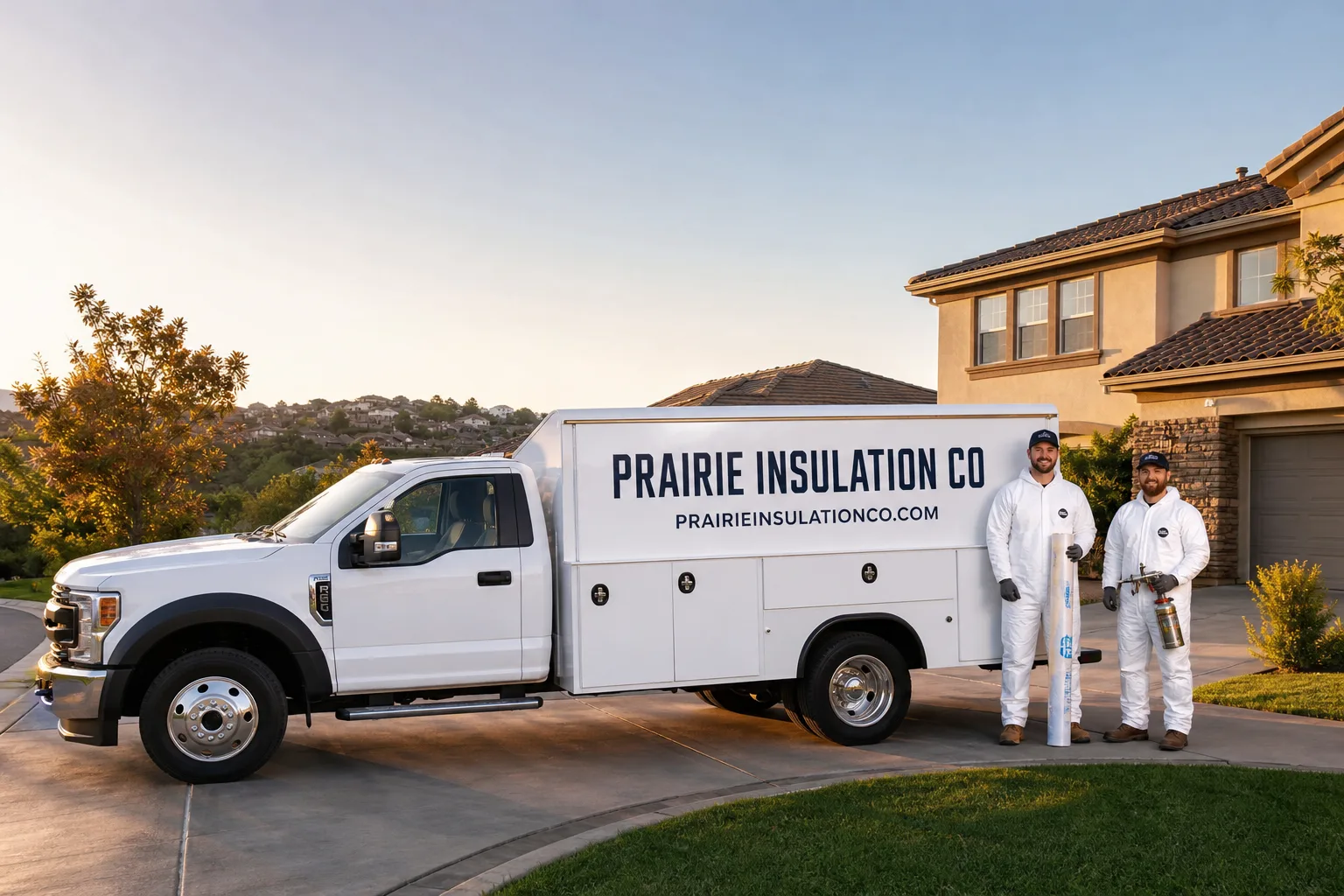
Fast, Reliable Attic Insulation Across Walnut
Attic insulation in Walnut, CA typically costs $1,800 to $5,200 for a full attic retrofit on the 1960s-1990s single-family homes that dominate this area, and most jobs are completed in one day. If your tile roof has been baking in San Gabriel Valley sun and your upstairs rooms won’t hold temperature, the fix usually starts with air-sealing, not just adding more fiberglass. We work throughout 91788, 91789, and 91795, and our crews know the kneewall-and-tile-roof construction these older tracts were built with. Call (855) 219-0368 for a free estimate, and we’ll tell you honestly whether you need a top-up, a full replacement, or something else entirely.
What makes Walnut homes different is what’s above the ceiling: concrete tile roofs on south-facing slopes soak heat all afternoon, and the original R-11 batts underneath have been settling and getting crushed around ductwork for 30 to 60 years. The result is an attic that doesn’t just get hot. It stays hot, radiating into upstairs bedrooms long after sunset. That’s the problem we solve here more than any other.
Why Prairie Insulation Co Is Walnut’s Preferred Attic Insulation Company
Homeowners in Walnut have been calling us because we don’t come in with a one-brand answer. We carry eight insulation manufacturers, and we recommend the material that fits the house, not the one we happen to stock the most of. For a 1980s tract home off La Puente Road with original R-11 batts, that might mean blown-in GreenFiber cellulose. For a two-story custom near the hills above Coco Palm Drive, it might be a Rockwool top-up for fire resistance plus a radiant barrier for the tile-roof heat load.
Response time to Walnut is usually same-week for standard jobs, and we schedule emergency attic work within 24 to 48 hours when we can. We know the streets here, from the newer developments off Valley Boulevard to the older single-story tracts around Lemon Avenue and Pierre Road. That matters when you’re trying to figure out whether a 1990s attic has settled batts or a ventilation problem, because we’ve seen both in Walnut homes and we can tell which one you’re dealing with.
Ken Sobecki runs our crews, and he’s the person Walnut homeowners talk to when they want a straight answer about whether their attic needs sealed, re-insulated, both, or neither. That kind of honesty is why most of our Walnut work comes from referrals rather than ads.
Attic Ventilation in Walnut
Attic Ventilation problems in Walnut show up as hot upstairs rooms in summer and, surprisingly often, as moisture or mildew smells in winter, because the cool night air that settles over the San Gabriel Valley meets a day-heated attic and creates condensation when airflow is poor. Walnut homes with concrete tile roofs and limited eave venting are the usual culprits, and the fix is usually baffles plus added intake or exhaust, not just more insulation. A typical attic ventilation correction in Walnut runs $600 to $1,800 depending on how many baffles and vents are needed, and it’s often part of a larger insulation job.
Baffle Installation and Airflow Correction
Many older Walnut attics still have no baffles at all, or the ones that exist were crushed when someone’s 1990s blown-in job covered the soffit vents. We re-establish airflow from the eaves to the ridge so heat and moisture have somewhere to go. Without that channel, no amount of insulation performs as rated, because the material ends up blocking the very vents it’s supposed to sit next to.
Ventilation Assessment Before Insulation
We check airflow before we add insulation, not after. In Walnut’s south-facing homes near Grand Avenue and the hills, an attic that hits 140°F in August won’t be fixed by R-19 on the floor if the air above it can’t move. Ken’s crew measures what’s happening up there first, then tells you what you actually need.
Radiant Barrier in Walnut
Radiant Barrier retrofits in Walnut are some of the highest-value work we do, because concrete tile roofs hold heat deep into the evening and a foil layer under the rafters stops much of that radiant energy before it ever reaches your insulation. For a typical 1,600-2,200 square foot Walnut home, a radiant barrier installation runs $1,200 to $3,000 depending on roof pitch and access, and it’s most effective on south- and west-facing exposures. This is not a replacement for insulation; it’s a layer that makes your insulation work better.
South- and West-Facing Slopes Near the Hills
Walnut homes on the southern edge of the city, especially the hills-edge tracts, get hammered by afternoon sun. A radiant barrier under the tile on those exposures can drop attic temperatures 20 to 30 degrees on a hot August day. If you’ve been running your AC at 74 and still feeling heat from the ceiling, this is often what’s missing.
Radiant Barrier with Existing Insulation
We sometimes add a radiant barrier to attics that already have decent fiberglass depth but still overheat, because the heat isn’t coming through the insulation; it’s radiating down from the tile above. That’s a distinction most generalist contractors miss. In Walnut’s tile-roof stock, the two are separate problems with separate fixes.
Trusted Brands We Service in Walnut
We install attic insulation from Owens Corning, Johns Manville, Knauf, and GreenFiber, and we keep blown-in materials available for Walnut jobs so we’re not waiting on a supplier when you’re ready to schedule. For a Walnut home with original 1980s fiberglass that’s been compacted, a GreenFiber cellulose top-up gives you the recycled-content story and the performance. For a fire-conscious homeowner near the open space, Rockwool’s mineral wool is what we specify. We carry all of them, and we pick based on your attic, not our inventory.
Common Attic Insulation Problems We See in Walnut Homes
- Settled R-11 batts from the 1960s-1980s build era. Walnut’s original tracts were insulated to 1980s code, which means R-11 or R-19 at best, and decades of duct and electrical work have crushed and displaced much of that. The rated R-value on paper doesn’t exist in the field.
- Unsealed kneewalls and top plates in tile-roof attics. Hot air from the attic moves straight into upstairs rooms through gaps around framing that were never sealed. In Walnut’s older single-story and hillside two-story homes, this is the primary cause of the “upstairs is always hot” complaint.
- Oversized HVAC units masking attic heat gain. We see Walnut homeowners who added a bigger AC unit to fight heat that’s actually coming through an uninsulated or under-ventilated attic. The cheaper fix would have been radiant barrier plus air-sealing, and we tell you that before you spend more on equipment.
- Santa Ana wind-driven air movement. During fall and winter Santa Ana events, dry wind pushes through attic vents and kneewall gaps, pulling conditioned air out of the house. Sealing those bypasses stops the stack effect and keeps the inside temperature where you set it.
Pricing for Attic Insulation in Walnut, CA
Here’s what we’re quoting in Walnut right now. An attic batt replacement on a standard 1,500-square-foot single-story runs $2,200 to $4,500 depending on depth and access. A blown-in top-up over existing insulation runs $1,200 to $2,800. A full attic retrofit with air-sealing, blown-in insulation, and a radiant barrier on a two-story hillside home costs $4,000 to $8,500. Attic baffle and ventilation correction alone runs $600 to $1,800. Variables include roof pitch, kneewall count, and how much old material needs removed. Estimates are free, and the number Ken gives you is what the job costs. Call (855) 219-0368 for an exact quote on your Walnut home.
We Also Serve Cities Near Walnut
Our Attic Insulation crews cover the hills and valleys around Walnut, including South San Jose Hills, Rowland Heights, Pomona, and Hacienda Heights. Same crew, same eight-brand approach, same straight answer on what your attic actually needs. If you’re right outside the Walnut city line, give us a call and we’ll schedule you the same week.
Serving Walnut, CA — Our Local Coverage Area
We’re based in the Walnut area and know this community well. Use the map below to see our service coverage — if you’re nearby, we can almost certainly help.
FAQs About Attic Insulation in Walnut
Most likely, yes. 1980s Walnut construction used R-11 or R-19 fiberglass batts, and by now those batts have settled, been compressed around ductwork, and lost much of their effectiveness. We verify with a quick attic inspection, but if your home hasn’t had insulation added since original construction, you’re probably running at half the modern recommended R-value. Call (855) 219-0368 and we’ll tell you exactly what’s up there.
A radiant barrier is strongly recommended for south- and west-facing tile roofs in Walnut because tile holds heat and radiates it into the attic for hours after sunset. It’s not mandatory for every home, but if your upstairs runs 8-10 degrees hotter than downstairs, a radiant barrier plus air-sealing usually fixes the problem better than more insulation alone. We’ll assess your specific roof orientation before recommending it.
Yes, insulation works both directions. Walnut’s winter nights drop into the 40s, and an underinsulated attic lets conditioned heat escape upward, which is why your furnace runs constantly on cold evenings. Adding insulation and sealing the top plates keeps heat inside, so the same retrofit that helps your summer AC bill also helps your winter gas bill.
We air-seal and insulate kneewalls specifically, not just the flat attic floor. In Walnut’s older single-story and two-story homes, kneewall gaps are one of the main paths for hot attic air to enter living space, and simply blowing more fiberglass on the floor doesn’t address them. Our crew seals the top plates, stapled bypasses, and kneewall cavities, then insulates them to modern R-value.
We install Owens Corning, Johns Manville, Knauf, GreenFiber cellulose, and Rockwool mineral wool, along with Icynene and Demilec spray foam for sealed-attic applications. We recommend based on your attic’s construction and your goals, not on what we have in the warehouse. For most Walnut tile-roof retrofits, the best answer is a combination of air-sealing, blown-in fiberglass or cellulose, and a radiant barrier.
If you’re tired of fighting upstairs heat in a Walnut home built in the 1970s, 80s, or 90s, call us at (855) 219-0368. Ken will walk the attic with you, tell you what’s actually going on, and give you a straight number for the fix. Free estimates, no pressure, and if you don’t need work done, we’ll tell you that too.
Written by Ken Sobecki, Owner at Prairie Insulation Co, serving Walnut and the San Gabriel Valley.