
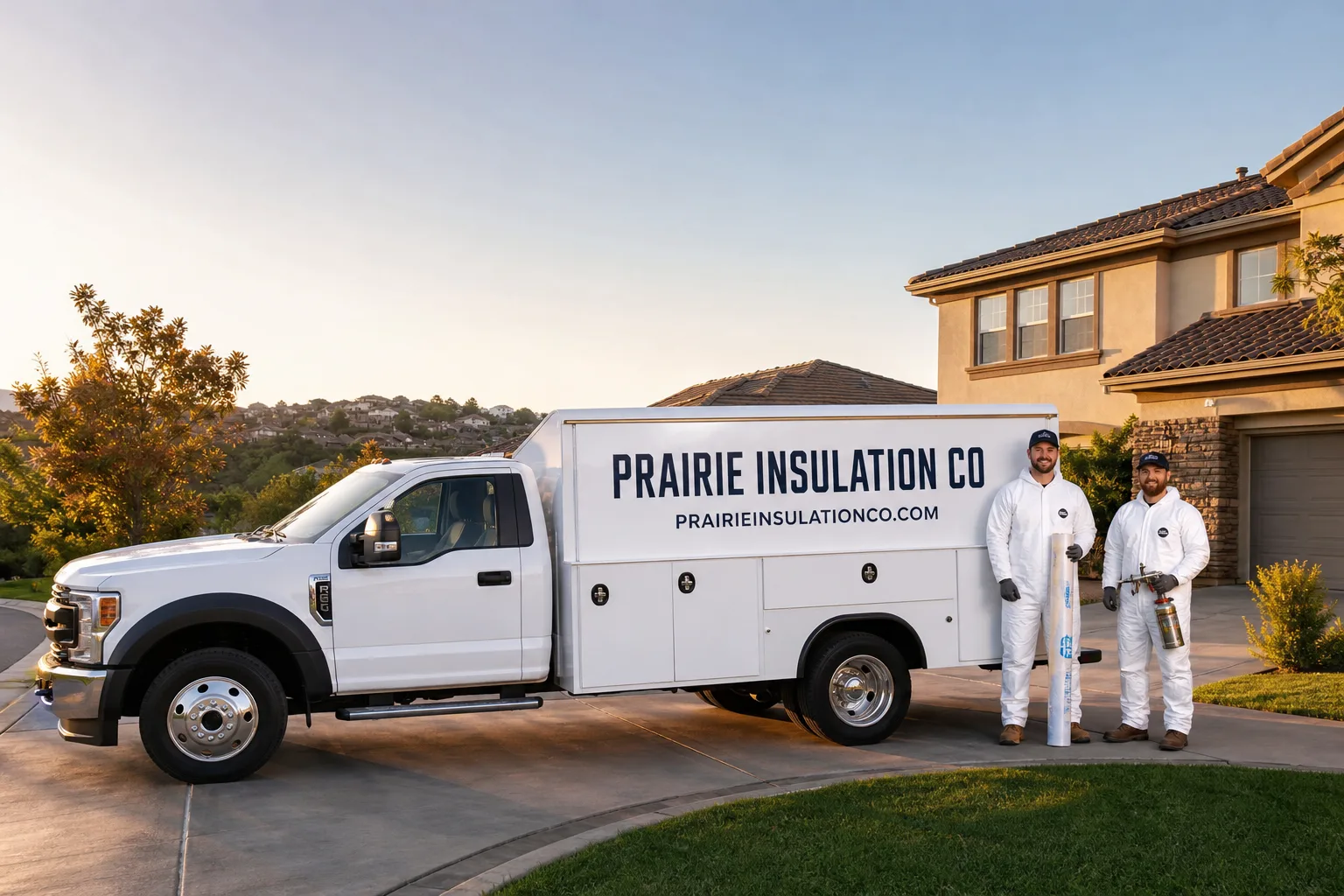
Fast, Reliable Attic Insulation Across Chino
Attic insulation in Chino is the highest-return upgrade most homeowners here can make, and it typically costs between $1,800 and $4,200 for a full blow-in on a standard 1,400 to 2,200 square foot home. That number shifts based on what we find once we open the attic hatch, but the pattern across 91708 and 91710 is consistent: older homes need removal and air-sealing first, newer homes need targeted baffle and chase work. Our crews work Chino every week, and we know the difference between a dairy-era ranch off Central Avenue and a 2000s tract home near The Preserve. If your upstairs rooms won’t hold temperature in July, call (855) 219-0368 and we’ll give you an honest read.
Why Prairie Insulation Co Is Chino’s Preferred Attic Insulation Company
Homeowners in Chino call us because we don’t walk in locked to one brand. Ken Sobecki built Prairie Insulation Co around a simple idea: the right material for the house wins, not the material we happen to stock most of. That matters in Chino because the city’s housing stock is two different worlds. A 1958 ranch in 91710 with original rock wool needs a completely different approach than a 2005 tract home in 91708 with unvented attic sections. We carry eight manufacturer lines, so we can match the job instead of forcing the job to match us.
Our Attic Insulation crews have spent enough afternoons in Chino attics to know what waits up there before we even open the hatch. We see the same compressed loose fill on the old dairy-belt streets, the same unsealed knee walls over garages in the 1960s ranches, the same missing baffles in the newer two-story tracts. That local knowledge means we show up with a plan, not a guess.
Response time to Chino is usually next-day or same-week for inspections, and we carry the materials local homes actually need: Owens Corning fiberglass for blow-in work, GreenFiber cellulose for homeowners who want recycled content, Rockwool for fire-resistance applications near can lights and flues. Free estimates, and the price we quote is the price on the invoice.
Attic Ventilation in Chino
Attic Ventilation in Chino is the difference between an attic that bakes at 140°F and one that stays close to outdoor temperature, and it’s the first thing we assess on every inspection in 91710 and 91708. When hot air gets trapped in a Chino attic during a 100°F stretch, it radiates down into the living space all night, forces your AC to run longer, and shortens the life of your shingles. Proper ventilation means balanced intake at the soffits and exhaust at the ridge or gable ends, with baffles keeping insulation from blocking the airflow. We see a lot of older ranch homes where someone blew in insulation years ago and buried the soffit vents entirely. The insulation was fine; the ventilation was destroyed.
Why Most Chino Attics Suffocate
The typical 1950s and 1960s house in Chino was built with passive gable vents and no continuous soffit intake. That worked, barely, when insulation was R-11 and heat could escape through the ceiling. Once you add R-49, the attic becomes a sealed oven unless we add intake capacity. That’s why we recommend baffles and intake upgrades on nearly every blow-in job we do here.
What a Balanced System Costs Here
Ventilation work in Chino typically adds $600 to $1,400 to an attic insulation project, depending on whether we’re adding baffles only or cutting new intake vents and installing a solar or electric exhaust fan. Homes with hip roofs or complex ridge lines run toward the higher end because there are more corners to address.
Radiant Barrier in Chino
Radiant Barrier in Chino earns its keep faster than almost anywhere else in Southern California because our summer sun presses down on roof decks for months, and a radiant barrier reflects a large share of that radiant heat before it ever reaches the insulation below. In a 91710 ranch with a dark composition shingle roof, we routinely measure attic temperature drops of 20 to 30 degrees after a radiant barrier install. That’s not a comfort upgrade; it’s a mechanical-load reduction. Your AC works less, and the rooms below the attic stop feeling like they’re fighting physics.
Where We Install It: Roof Deck vs. Attic Floor
In Chino’s climate, we specify radiant barrier on the underside of the roof deck rather than laid across the insulation. On the roof deck, it blocks heat before it enters the attic cavity. Laid on the floor, it collects dust and loses reflectivity within a few years. The roof-deck method is more labor, but it’s the correct approach for sustained heat gain.
Radiant Barrier Cost for a Typical Chino Home
For a standard 1,800 square foot single-story home in Chino, expect $1,200 to $2,600 for a roof-deck radiant barrier install, depending on roof pitch and accessibility. It pairs especially well with a blow-in insulation upgrade; combined, they’re the most effective attic overhaul we offer for Inland Empire summers.
Trusted Brands We Service in Chino
We stock and install insulation from eight manufacturers, and for Chino homes the ones we reach for most are Owens Corning for fiberglass blow-in, GreenFiber for cellulose top-ups, and Rockwool for the dairy-era ranches where old framing and fire-blocking questions come up. Carrying multiple brands means we don’t have to convince a Chino homeowner that one product works for every situation. We recommend based on what the attic actually shows us, not what we have the most inventory of. Parts and materials for Chino jobs are staged locally, so we’re not waiting on a supply house in another county when your attic is already open.
Common Attic Insulation Problems We See in Chino Homes
- Compressed 1950s rock wool in 91710 ranches: The original loose fill on the old dairy-belt streets has settled to a few inches, often R-6 to R-11 in practice. Blowing new insulation on top just traps the dead mat underneath and the ceiling never reaches the R-49 target.
- Unsealed knee walls in 1960s and 1970s homes: The short walls where a ranch attic meets the roofline are usually open to the attic cavity. Hot air pours through them into bedrooms and bonus rooms, so the rooms above garages are consistently the hottest in the house, no matter how much insulation sits over the ceiling joists.
- Missing or crushed baffles in 1990s and 2000s tract homes in 91708: Newer subdivisions like those near The Preserve often have complex unvented attic sections. Without proper baffles at the soffit line, insulation blocks airflow, heat builds up inside the roof assembly, and you get condensation in winter.
- Original loose fill that has to go, not stay: On a ranch-style dairy-era home off Central Avenue in 91710, our crew found the original rock wool pounded flat to about three inches over the ceiling joists. We vacuumed it out, air-sealed the top plates and knee walls, then blew Owens Corning fiberglass to R-49 and added baffles to keep the soffit vents clear. The attic peak on the next 104°F afternoon dropped dramatically versus the pre-work reading.
Pricing for Attic Insulation in Chino, CA
Full attic blow-in for a standard Chino home runs $1,800 to $4,200, with the higher end reflecting homes that need old insulation removed first. Attic batt insulation for open flat attics runs $1,200 to $2,800 depending on square footage. Insulation top-ups over existing, intact fill run $900 to $1,800. Replacement work that includes removing compressed dairy-era rock wool adds $800 to $1,500, because removal, bagging, and disposal add real labor. Attic baffles and ventilation prep run $300 to $800 as a standalone. Radiant barrier on the roof deck runs $1,200 to $2,600. We give you a written, itemized quote before any work begins. Call (855) 219-0368 for a free attic assessment.
We Also Serve Cities Near Chino
Our crews cover the surrounding Inland Empire cities every week, so if you’re in Los Serranos, Ontario, Eastvale, or Norco, the same team that knows Chino attics is available for your place too. Most of these neighborhoods share the same climate patterns and housing-era mix, which means our local knowledge transfers directly. We’re used to crossing the 60 and the 71 for inspections and installs.
Serving Chino, CA — Our Local Coverage Area
We’re based in the Chino area and know this community well. Use the map below to see our service coverage — if you’re nearby, we can almost certainly help.
FAQs About Attic Insulation in Chino
You can’t blow over old compressed fill in a 1950s Chino ranch because the existing rock wool or loose fill has usually settled to a few inches and acts as a dead, dense mat. Blowing new fiberglass on top doesn’t undo the compression underneath, and the ceiling assembly never reaches the R-49 rating you paid for. The right sequence is removal, air-sealing the top plates and any knee walls, then a clean blow-in to full depth. It costs more upfront but performs like it should for the next 30 years. Call (855) 219-0368 and we’ll inspect what’s actually up there before recommending anything.
Newer tract homes in 91708 need different work, not always the same work. The common issues there are missing or crushed baffles at the soffit line, unsealed chases around plumbing and electrical runs, and unvented attic sections that build heat and trap moisture. Blow-in insulation without fixing those first just adds material to a broken assembly. Our 91708 inspections focus on baffle placement, chase sealing, and whether the existing insulation depth matches what the builder promised. Estimates are free, so call (855) 219-0368 if your upstairs rooms are struggling.
A radiant barrier in Chino buys you a cooler attic by 20 to 30 degrees on a summer afternoon, which means the insulation below works less hard and the ceiling doesn’t radiate heat into the house after sunset. It’s especially effective on the dairy-era ranches with low-slope roofs and dark shingles, where radiant heat gain is the dominant load. We install it on the roof deck underside, not laid over insulation on the floor, because that’s where it blocks heat before it enters the attic cavity. Expect $1,200 to $2,600 for a standard single-story home. We’ll tell you honestly if your attic would benefit.
Yes. Unsealed knee walls in older Chino ranches let hot attic air pour directly into the conditioned space, which means the rooms above garages and along the roofline stay hot even with R-49 over the ceiling joists. We air-seal knee walls as part of a full attic upgrade, because blow-in insulation alone can’t fix a direct air path from a 130°F attic into a bedroom. The sealing work usually adds $400 to $900 and it’s the single most underrated fix in 91710 homes.
For Chino’s sustained 100°F-plus summers, we specify R-49 as the target depth for blown-in fiberglass or cellulose, which is roughly 16 to 18 inches of settled material. R-38 is acceptable in some shaded, well-ventilated attics, but given how little coastal influence reaches Chino, R-49 is the number we recommend for most homes. Older 91710 ranches are usually starting from R-6 to R-11, so the jump is dramatic once removal and air-sealing are complete. The exact depth for your attic depends on joist layout and depth, and we’ll tell you precisely after an inspection call at (855) 219-0368.
Written by Ken Sobecki, Owner at Prairie Insulation Co, serving Chino and the Inland Empire with attic insulation, spray foam, and blown-in insulation since the company’s founding.