
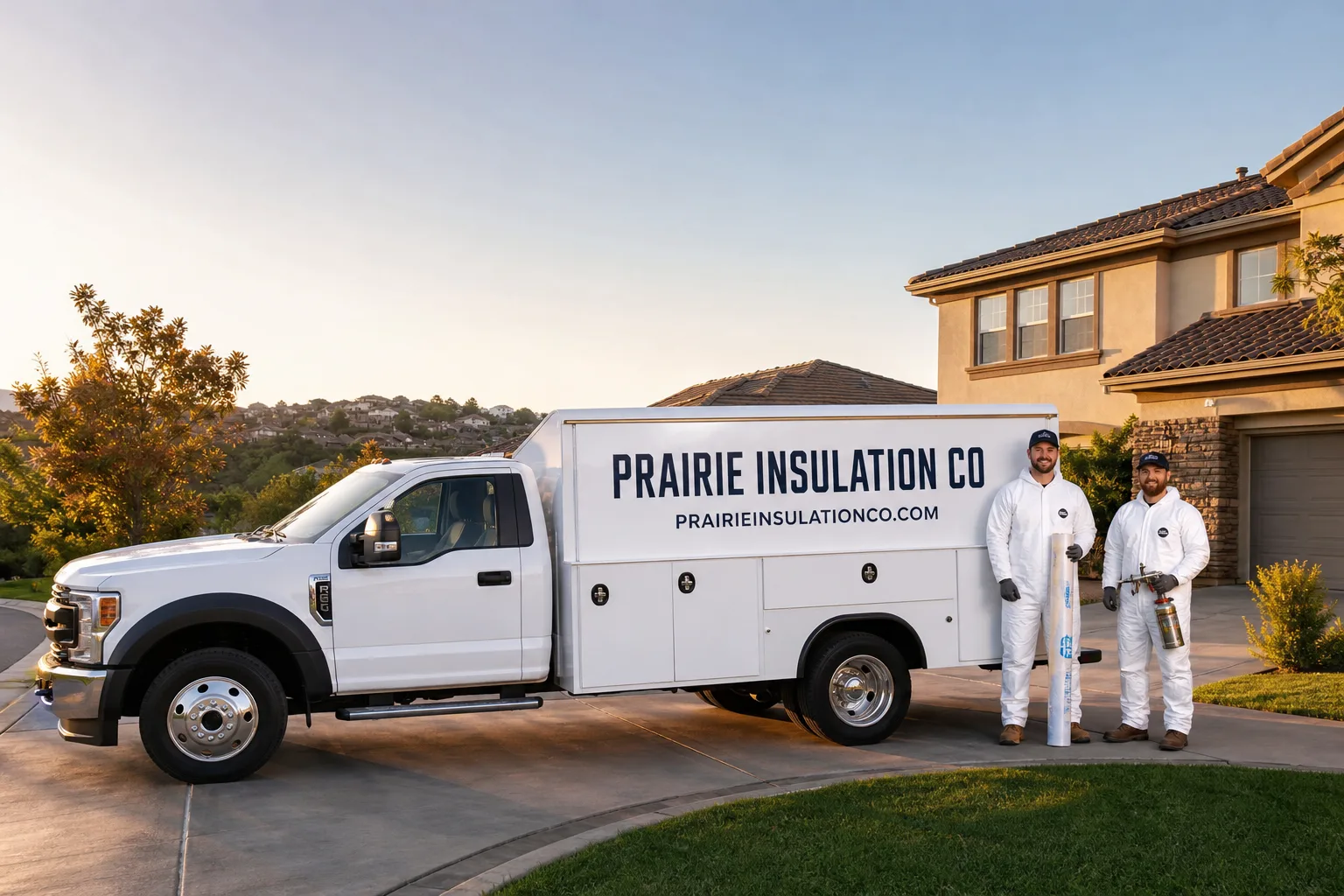
Fast, Reliable Attic Insulation Across Long Beach
Attic insulation in Long Beach is rarely a straight R-value job. Our crews work from Signal Hill to Los Alamitos, and what we see in the pre-war bungalows off Fourth Street and Broadway is the same pattern: humid marine-layer air moving through unsealed attic bypasses, condensing on cold interior plaster, and turning what should be a simple insulation upgrade into a moisture problem. We respond to Long Beach within one to two business days for most assessments, and we carry the materials to match the house, not just the budget. If your energy bills climb through summer and your rooms never hold temperature, call (855) 219-0368.
Why Prairie Insulation Co Is Long Beach’s Preferred Attic Insulation Company
We specify insulation for the house in front of us. That matters in Long Beach because a 1926 single-wall bungalow in Alamitos Beach and a 1962 tract home in Los Altos need fundamentally different approaches. Ken Sobecki built Prairie Insulation Co around that principle: stock eight manufacturer lines, understand each material’s moisture behavior, and recommend the one that actually fits the building’s assembly.
Long Beach homeowners tend to ask sharper questions than most. They’ve lived with marine-layer condensation, they’ve felt cold walls on June mornings, and they’re skeptical of a contractor who shows up with one product and a pitch. Our approach handles that skepticism directly: we explain air sealing and vapor management before we talk about batt depth or R-value. That’s why our Long Beach work skews toward older homes – homeowners in 90802 and 90803 especially – where the attic is the gateway for the air that’s causing the problem.
Attic Insulation Removal in Long Beach
Attic insulation removal in Long Beach is often the first step for homes built before 1945, where old loose fill has settled, absorbed decades of marine moisture, or been contaminated by rodents, and it typically runs $1.50 to $3.00 per square foot depending on depth and access. In a Long Beach attic that’s never been touched, what you’re often looking at is a compacted layer of original material that’s lost its thermal performance and is now holding moisture against the ceiling drywall or plaster.
Old Loose Fill and Vermiculite in Pre-War Attics
Homes across 90803 and 90804 that predate the 1940s commonly hold loose fill that’s been settling for fifty or sixty years. The material compresses, loses its air pockets, and stops doing its job. Worse, in Long Beach’s persistent humidity, that settled layer can wick moisture from the air movement below it and hold it against framing.
We remove it, inspect the ceiling plane for air bypasses, and only then do we talk about what goes back in. Removal also gives us a clean look at any knob-and-tube wiring or old galvanized vents that need to be routed around before new material goes down.
Replacement After Water or Pest Damage
Long Beach attics near the coast take a beating from salt air and humidity. When a roof leak or a condensation problem has soaked the existing insulation, no amount of topping off will fix it – the material has to come out. The same goes for rodent damage. Insulation that’s been soiled or compressed by nesting is a material you don’t want to leave in place.
Insulation Contractors in Long Beach
Insulation contractors in Long Beach cover a wide range of skill levels, and the difference between them shows up fastest in older homes where air sealing and vapor barriers matter more than the insulation itself. A typical attic insulation installation in Long Beach runs $2.75 to $4.50 per square foot for blown-in fiberglass or cellulose, and $4.00 to $7.00 per square foot for spray foam, depending on depth, access, and how much prep work the attic needs first.
Air Sealing Before Any Material Goes In
In Long Beach’s marine layer, air sealing isn’t an add-on. It’s the job. We seal ceiling-plane penetrations, top plates, can light housings, and the gap around the attic hatch before we blow or lay any insulation. Without that step, you’re paying for material that’s being actively undermined by humid air moving through the assembly.
This matters more in 90802 and 90803 than almost anywhere else we work. Single-wall stucco construction from the 1920s and 1930s has no wall insulation and no vapor barrier. The attic is where all that interior moisture escapes, and if you cap it carelessly, you create a mold chamber above your ceiling.
Vapor Management for Coastal Attics
Older Long Beach homes have a humidity load newer tract homes don’t. The marine layer keeps outdoor air damp for months at a stretch, and attics with poor gable or soffit ventilation trap that moisture. We specify vapor-appropriate assemblies: in many bungalow attics that means open-cell spray foam or a properly vented blown-in assembly, depending on what the ceiling and wiring configuration allows.
The failure we’re called to fix most often is an attic that was sealed tight without correcting ventilation first. The insulation looks fine from below; the mold growing on its underside tells a different story.
Trusted Brands We Service in Long Beach
Prairie Insulation Co carries eight manufacturer lines, and we stock the materials Long Beach homeowners ask for most. Owens Corning fiberglass goes into attics where vented blown-in assemblies make sense. Knauf batts handle straightforward joist-bay fills on tract homes in 90805 and 90806. Rockwool comes out when fire resistance or acoustic separation matters, which is more common in Long Beach than people expect given how many pre-war homes sit inches from their neighbors. We keep these materials available for quick turnaround in Long Beach, Los Alamitos, and Rossmoor, so we’re not waiting on a distributor when your attic is already prepped and the old material is out.
Common Attic Insulation Problems We See in Long Beach Homes
- Blowing insulation over knob-and-tube wiring without air sealing. Humid marine air keeps moving through the ceiling plane, condenses on cold interior plaster, and the new insulation above it gets blamed for a problem it didn’t create.
- Sealing an old attic tight and trapping humidity. Gable vents on 1920s bungalows in 90802 and 90803 were often undersized to begin with. Close the remaining ventilation and the new insulation mists from below.
- Topping off settled loose fill that’s soaked up decades of coastal moisture. New material over wet old material doubles the problem. The old stuff has to come out first in most Long Beach pre-war attics.
- Ignoring the single-wall construction reality. Long Beach’s original stucco bungalows have no wall cavity to insulate. The attic becomes the default place to slow heat loss, which only works if air and vapor are handled first.
Pricing for Attic Insulation in Long Beach, CA
As an honest set of ranges for Long Beach’s market: blown-in fiberglass or cellulose attic insulation typically runs $2.75 to $4.50 per square foot. Batt insulation installed in standard joist bays runs $1.75 to $3.25 per square foot. Spray foam runs $4.00 to $7.00 per square foot depending on open- or closed-cell and roof deck versus floor application. Attic insulation removal runs $1.50 to $3.00 per square foot. The biggest cost variables in Long Beach are attic access, the condition of what’s already up there, and how much air sealing the ceiling plane needs before material goes in. Call (855) 219-0368 and we’ll give you a real number for your attic, not a vague ballpark. Estimates are free.
We Also Serve Cities Near Long Beach
Our crews work all over the Long Beach area, from Signal Hill and Lakewood to Los Alamitos and Rossmoor. If your attic has the same marine-layer moisture profile as the coastal bungalows we work in around Long Beach, you’re dealing with the same set of problems. And if you’re not sure whether the issue is insulation, ventilation, or air sealing, our Attic Insulation team can assess it in one visit.
Serving Long Beach, CA — Our Local Coverage Area
We’re based in the Long Beach area and know this community well. Use the map below to see our service coverage — if you’re nearby, we can almost certainly help.
FAQs About Attic Insulation in Long Beach
Because the insulation was added without first air sealing the ceiling plane or correcting the attic’s ventilation, so humid marine-layer air that used to escape through the attic now gets trapped and condenses against cold surfaces. In pre-war Long Beach bungalows, the original attic was designed to breathe, not be sealed. When you restrict that airflow without managing vapor first, condensation forms on the underside of the new insulation and the framing around it. The moisture was already there; the insulation just gave it a place to collect. Call (855) 219-0368 if you’re seeing staining or mold after an insulation job – we’ll assess what went wrong and what’s needed to fix it properly.
Not by itself, and in some cases it can make the problem worse. That condensation on Belmont Shore interior walls is a vapor and air-sealing issue first and an insulation issue second. The humid marine air is finding cold surfaces inside your single-wall assembly, and the attic is often where that moisture is traveling from or through. We recommend sealing attic bypasses and addressing vapor movement before adding R-value. Adding insulation without that step can trap more moisture against interior plaster. An assessment from us will tell you whether the fix starts in the attic or elsewhere.
Only if the existing material is dry, uncontaminated, and still loose enough to provide thermal performance. In a 1950s tract home in 90805, that’s sometimes the case, but Long Beach humidity has a way of working into older loose fill and compacting it over sixty years. If the old material is damp, moldy, or so compressed it’s lost its air pockets, topping it off just buries the problem. We’ll inspect what’s up there and tell you honestly whether it’s a top-off or a removal job. The inspection is part of the free estimate.
We install Owens Corning, Johns Manville, Knauf, Rockwool, CertainTeed, Icynene, Demilec, and GreenFiber, depending on what your attic actually needs. For vented blown-in attics in Long Beach tract homes, Owens Corning fiberglass is a common spec. For bungalows where fire resistance matters, Rockwool makes sense. For complex air-sealing jobs on older homes, Icynene or Demilec spray foam may be the right call. The point is that we’re not tied to one product, so we can recommend what fits your house. Call (855) 219-0368 for a material recommendation based on your attic’s construction.
They change the sequence of the entire job. Knob-and-tube wiring means we cannot simply blow insulation over live wiring – that creates a fire hazard, and any experienced Long Beach insulation contractor will flag it before touching the attic. The wiring has to be routed or safeguarded first, or the insulation layout has to work around it. Galvanized plumbing in these attics is often rusted and fragile from decades of coastal moisture, and disturbing it during insulation work can create leaks. In a 1920s-40s Long Beach bungalow, the realistic order is: assess wiring and plumbing, air seal, correct ventilation, then insulate. It’s slower than a tract-home job, but it’s the only way that doesn’t create problems. Call (855) 219-0368 and we’ll walk you through what your specific attic needs.
If your Long Beach attic hasn’t been looked at in years, or you’re seeing the signs of marine-layer moisture working its way through your ceiling, call (855) 219-0368. Ken Sobecki and the Prairie Insulation Co crew will give you a straight assessment, a real price, and a recommendation that fits your house, not a sales script.
Written by Ken Sobecki, Owner at Prairie Insulation Co, serving Long Beach and surrounding communities.