
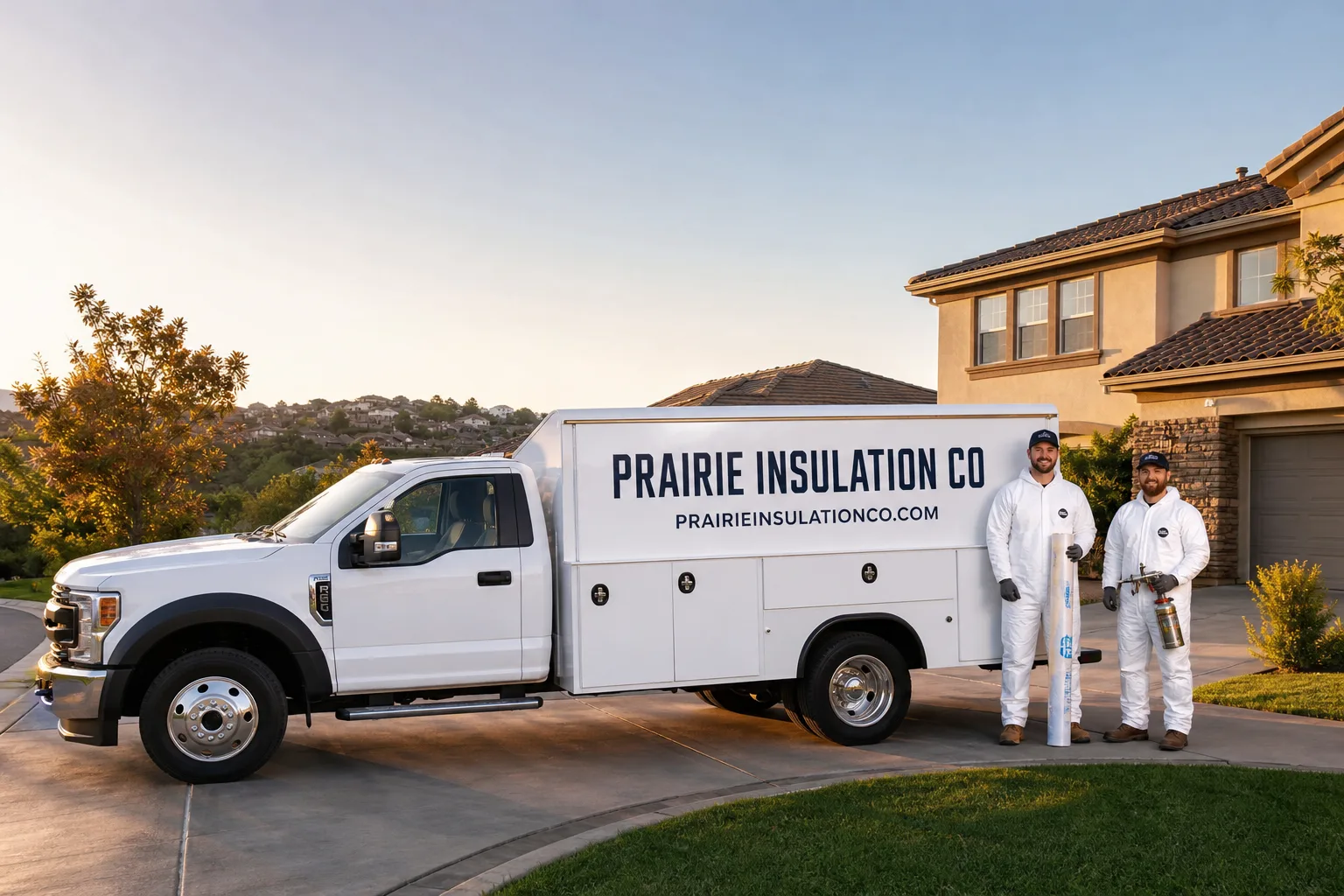
Fast, Reliable Attic Insulation Across Huntington Beach
Attic insulation in Huntington Beach has to do more than trap heat. In the beach-close blocks of 92648 and 92649, salt air and fog attack staples, fasteners, and foil facings before the insulation itself loses R-value, so the right fix starts with corrosion resistance and ventilation, not just thicker batts. We’re Prairie Insulation Co, and our crew works these neighborhoods every week. We know what moisture-sagged batts look like, we know which fasteners survive the marine layer, and we show up with the right materials the first time. Call (855) 219-0368 for an attic assessment, and we’ll tell you honestly what’s actually wrong up there.
Key Takeaways:
- Huntington Beach’s fog belt corrodes attic fasteners faster than inland heat damages insulation.
- Most 92648 and 92649 attics need ventilation and corrosion-resistant hardware before more R-value.
- We stock and install Johns Manville, Knauf, Rockwool, and CertainTeed for coastal conditions.
- A typical attic insulation job in Huntington Beach runs $1,400 to $4,200 depending on access and square footage.
- Same-week scheduling is available for most Huntington Beach homes.
Why Prairie Insulation Co Is Huntington Beach’s Preferred Attic Insulation Company
We’re material-agnostic, and that matters more here than most people realize. Coastal attics in Huntington Beach present a specific problem: fog moisture condenses on the underside of roof decking, staples rust, and batts sag away from the deck, leaving gaps where heat pours out in winter and pours in during summer heat waves. A contractor who only carries one brand of fiberglass will tell you to add more fiberglass. We won’t, because we carry eight manufacturer lines and we’ve seen what actually works in these homes. When a 92648 beach cottage shows rusted fastener heads and stained decking, the right call is usually vapor barrier correction, ventilation, and a material that can handle humidity, not another layer of batt.
Ken Sobecki built Prairie Insulation Co around this kind of straight answer. Our customers in Huntington Beach call us because we specify materials for their actual conditions, not for our inventory. We carry Owens Corning, Johns Manville, Knauf, Rockwool, CertainTeed, Icynene, Demilec, and GreenFiber. That lineup means we can recommend mineral wool where fire resistance or soundproofing matters, open-cell spray foam where air sealing is the priority, and cellulose where recycled content and dense coverage make sense. One crew handles all of it, so you’re not coordinating three subcontractors for a single attic project.
Attic Ventilation in Huntington Beach
Attic Ventilation in Huntington Beach does more than control temperature: it’s the difference between an attic that dries out after a foggy morning and one that slowly rots. The marine layer rolls in most nights, and without proper ridge and soffit airflow, that moisture lingers against the decking and the insulation below it. Homeowners in 92646, 92647, and 92648 should think of ventilation as the first insulation upgrade, not an add-on. A correctly balanced attic vents coastal humidity before it condenses, which protects both the framing and whatever insulation you install. Typical attic ventilation work in Huntington Beach runs $900 to $2,300 depending on roofline length, baffle count, and whether we’re retrofitting an older home or working on new construction.
Ridge and Soffit Retrofit Details
Older Huntington Beach tract homes, especially 1950s and 1960s single-story stucco boxes, were built with minimal soffit venting and often no ridge vent at all. That worked fine in a drier inland climate, but it does not work on the coast. We cut ridge vents, add or enlarge soffit intake, and install baffles to keep insulation from blocking airflow at the eaves. The goal is a continuous air path from low to high, so damp air exits instead of finding a cold surface to condense on.
When Ventilation Has to Come First
If we open your attic and see water stains on the decking or rusted fastener heads, ventilation becomes the priority job. Adding R-value to a wet attic traps more moisture. We’ll recommend drying the deck first, correcting airflow, and only then building up the insulation layer. In the beach-close blocks of 92648 and 92649, this sequence prevents the sagging-batt problem from coming back within two or three years.
Radiant Barrier in Huntington Beach
Radiant Barrier in Huntington Beach works differently than in the desert, but it still earns its place every summer. A radiant barrier reflects radiant heat from the roof deck before it can radiate down into the living space. In Huntington Beach, where afternoon sun hits composition shingle roofs hard and the marine layer burns off by mid-morning, a properly installed radiant barrier can drop attic temperatures by 20 to 30 degrees on hot days. The catch, and it’s a real catch on the coast, is that foil-facing radiant barriers corrode and stain in salt air if they’re not matched with corrosion-resistant fasteners and adequate ventilation. We spec barrier products with the right facing and attachment for the fog belt, not whatever’s cheapest at the supply house. Radiant barrier installation in Huntington Beach typically runs $1,100 to $2,800 for a standard single-story attic.
Foil Facing and Salt Air
In 92649, we regularly see radiant barrier foil that’s pitted and discolored within five years because it was stapled with bare steel fasteners. The fix is straightforward: coat the staples, use compatible fasteners, and keep air moving so condensation doesn’t sit on the foil. A radiant barrier that’s corroding isn’t just ugly; it’s losing reflectivity and starting to trap moisture against the decking.
Pairing Radiant Barrier With Ventilation
The best radiant barrier installs in Huntington Beach combine the reflective layer with a real ventilation retrofit. Reflective foil plus ridge and soffit airflow means the attic stays cool in summer and dry in winter. We’ve done this combination on dozens of mid-century beach cottages and ranches across 92648 and 92647, and it’s the detail that separates an insulation job from an actual attic correction.
Trusted Brands We Service in Huntington Beach
We’re not tied to one manufacturer, and that keeps us honest. For Huntington Beach’s coastal tract homes and beach cottages, the brands we reach for most are Johns Manville and CertainTeed for fiberglass batts with proven moisture performance, Knauf for dense blown-in coverage where access is tight, and Rockwool when a homeowner needs fire resistance or real soundproofing between rooms. Because we install all of them, we can match the material to the house instead of forcing one product line onto every job. We keep common batt sizes and blowing fiber stocked for quick turnaround, so a Huntington Beach attic project doesn’t stall waiting on a warehouse order.
Common Attic Insulation Problems We See in Huntington Beach Homes
- Corroded staples and sagging batts: In 92648 and 92649, fog moisture condenses on the underside of the roof deck, runs down, and rusts the fasteners holding batts in place. Once staples fail, the whole batt sags away from the deck and stops insulating where it matters most.
- Stained roof sheathing from trapped moisture: Older Huntington Beach homes often have little to no ridge venting, so nighttime fog settles in and never leaves. The decking stains first, then mold appears, and eventually the framing begins to rot from the underside.
- Reversed or missing vapor barriers: A lot of 1950s and 1960s beach cottages were retrofitted by contractors who didn’t understand coastal moisture drive. A vapor barrier on the wrong side of the assembly traps marine moisture against the decking instead of letting it dry.
- Thin original insulation that reads as a thermal problem when it’s really a moisture problem: Homes from the 1960s and 1970s often have R-11 or R-13 batts that were never enough, but heavily wetted by decades of Pacific air. Replacing them without fixing the moisture source gives you two or three comfortable years before the problem returns.
Pricing for Attic Insulation in Huntington Beach, CA
A typical attic insulation project in Huntington Beach runs between $1,400 and $4,200, depending on square footage, access, and whether we’re topping up existing batts or doing a full removal and replacement. Blown-in attic insulation runs $1,200 to $2,600 for a standard 1,100 to 1,700 square foot single-story home. Attic batt insulation for the same size runs $1,400 to $3,200. A full replacement with old batt removal and disposal adds $600 to $1,200 depending on how much material is up there. Radiant barrier installation adds $1,100 to $2,800, and ventilation retrofits add $900 to $2,300. If your attic has corroded fasteners, moisture damage, or needs baffles before new insulation goes in, those costs get line-itemed separately so you know exactly what you’re paying for. Call (855) 219-0368 for a free estimate; we’ll walk the attic with you and give you a written number.
We Also Serve Cities Near Huntington Beach
Our crews cover the whole coastal plain around Huntington Beach, so if you’re in Midway City, Fountain Valley, Westminster, or Costa Mesa, you’re still in our service area. We keep the same material stocking and same crews working the same neighborhoods, which means faster scheduling and crews who already know your housing type. Whether you’re in a 92648 beach cottage or a 92646 tract home, you get the same Attic Insulation expertise and the same honest material recommendations.
Serving Huntington Beach, CA — Our Local Coverage Area
We’re based in the Huntington Beach area and know this community well. Use the map below to see our service coverage — if you’re nearby, we can almost certainly help.
FAQs About Attic Insulation in Huntington Beach
Sagging attic insulation in Huntington Beach is almost always a fastener failure caused by fog moisture, not a product defect. Coastal air condenses on the underside of your roof deck, moisture runs down onto the batt, and the staples holding it up rust and eventually give way. The batt then peels away from the deck, leaving a gap that destroys its R-value. The fix is corrosion-resistant fasteners plus better ventilation, not just restuffing the same material. Call (855) 219-0368 and we’ll inspect what’s actually up there.
Yes, salt air in 92649 corrodes the metal components that hold attic insulation in place long before it degrades the insulation fibers themselves. We routinely find staples, fastener heads, and radiant-barrier facings pitted and rusted in beach-close attics while the fiberglass or cellulose is still technically intact. That corrosion-first failure pattern is specific to Huntington Beach’s fog belt, and it’s why we spec coated staples and corrosion-resistant attachment hardware for every 92649 job. Give us a call at (855) 219-0368 to schedule an attic inspection.
In most beach-close Huntington Beach cottages, yes. If your attic shows signs of moisture staining, rusted fasteners, or mold on the decking, adding insulation without correcting the vapor barrier and ventilation will trap moisture and make the problem worse. We fix the drying path first, then add insulation. The sequence matters, and it’s the difference between a 3-year fix and a 30-year fix.
We install Johns Manville, Knauf, Rockwool, and CertainTeed, along with Owens Corning, Icynene, Demilec, and GreenFiber. For coastal tract homes and beach cottages, we lean toward JM and CertainTeed fiberglass for moisture resistance, Knauf for blown-in coverage, and Rockwool for fire and sound performance. No single product does everything, so we recommend the material that matches your home’s actual conditions.
Yes, a radiant barrier helps in Huntington Beach, but only if it’s installed with corrosion-resistant fasteners and paired with proper ventilation. Reflective foil drops attic temperatures significantly in summer, which lowers cooling load and makes upstairs rooms stay the temperature you set. Without ventilation and the right attachment, the foil corrodes in salt air and loses its reflectivity within a few years. We specify the right foils and the right fasteners for the fog belt, so the barrier lasts.
What We Found in a Beach Cottage off Beach Boulevard
On a mid-century beach cottage off Beach Boulevard in 92648, our crew pulled down sagging Owens Corning batts that had been fog-soaked for years. The staples holding them were rusted to the point of crumbling, and condensate had stained the decking above. We replaced the fasteners with corrosion-resistant coated staples, added ridge and soffit ventilation to dry the deck, and reset the vapor barrier before installing new batts. That assembly could dry instead of trapping marine moisture. That’s the difference between an insulation company that works the coast every week and one that treats every attic the same.
Written by Ken Sobecki, Owner at Prairie Insulation Co, serving Huntington Beach with material-agnostic attic insulation expertise.
Ready to fix what’s actually wrong with your attic? Call (855) 219-0368 for a free estimate. We’ll inspect your attic, show you what we found, and give you an honest written number, no obligation.