

Fast, Reliable Attic Insulation Across Home Gardens
Attic insulation in Home Gardens usually means retrofitting a 1950s or 1960s tract home that never had enough insulation to begin with. Most houses here were built for the Inland Empire’s postwar citrus and dairy workforce, and many still have their original rock lath ceilings with little more than a dusting of vermiculite overhead. When afternoon attic temps push toward 140°F, those rooms directly underneath turn into ovens. We fix that. Prairie Insulation Co has been specifying and installing insulation across Home Gardens long enough to know which homes off Magnolia Avenue and Ontario Avenue need full cavity retrofits versus a simple top-up. Call (855) 219-0368 and we’ll talk through what your attic actually needs.
Why Prairie Insulation Co Is Home Gardens’s Preferred Attic Insulation Company
Home Gardens homeowners tend to be skeptical of one-size-fits-all answers. They’ve lived through enough 100°F summers to know that what works in a newer Eastvale two-story doesn’t necessarily work in a 1962 slab-on-grade tract home with a low-pitch roof. That’s exactly why we stock and install products from eight manufacturers rather than pushing a single brand. The right insulation for a Home Gardens home depends on the ceiling assembly, roof deck height, existing ventilation, and whether the walls still have original rock lath.
We’re known in Home Gardens for showing up early. In the summer, attic cavities get unworkable by late morning, so our crews start before 10 a.m. when the roof deck is still tolerable. That scheduling discipline matters more than most homeowners realize. A crew that rolls in at noon in August can’t safely work a 140°F attic, and the job slips to the next day. Residents off Magnolia and Ontario appreciate that we plan around the heat instead of pretending it doesn’t exist.
We also carry the brands that serve older construction. Rockwool, for example, adds fire resistance and sound dampening that standard fiberglass can’t match, which matters when you’re retrofitting a home with original 2×4 framing and limited cavity depth. Johns Manville and CertainTeed fiberglass lines cover the mid-range options for standard attic floor installations. No single product does everything, and we’d rather tell you that upfront than sell you the wrong material.
Attic Cleaning Services in Home Gardens
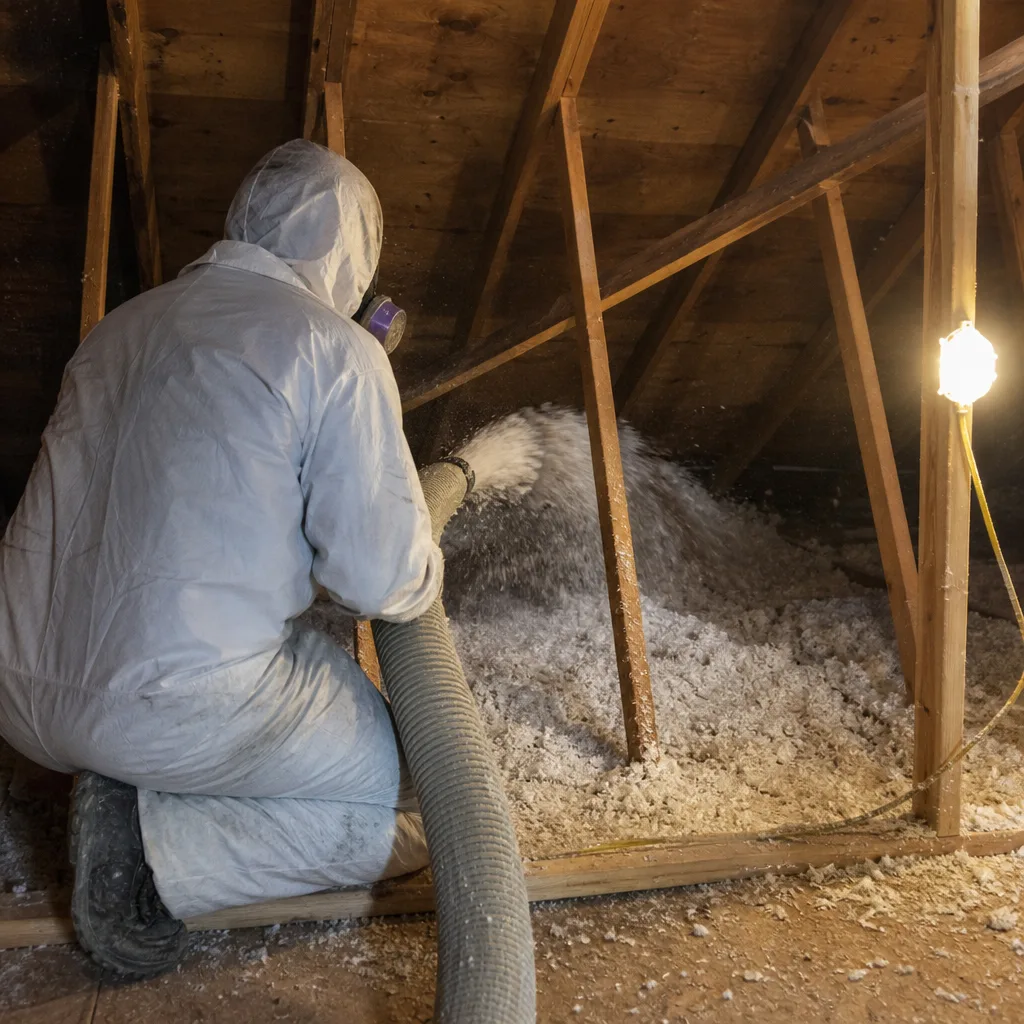
Attic Cleaning Services in Home Gardens typically involve removing old degraded insulation, decades of dust, rodent debris, and sometimes the original vermiculite that’s settled to a thin, ineffective layer over rock lath. In these 1950s and 1960s tract homes, we rarely find an attic that doesn’t need some level of cleaning before new insulation goes in. The old vermiculite absorbs moisture, compresses, and loses whatever minimal R-value it once had. Cleaning it out is step one before any top-up or replacement.
What Gets Removed
We vacuum out loose-fill material, bag it, and remove it from the property. This includes old fiberglass, cellulose, and vermiculite. We also clear debris that’s accumulated around the eaves and check whether the baffles at the soffit vents are still clear. In Home Gardens, original baffles are frequently crushed or missing, which means the soffit vents haven’t been doing anything for years.
When Cleaning Becomes Urgent
If you smell something musty when the AC kicks on, or if your upstairs ceiling is warm to the touch in the evening, the attic likely needs attention. Rodent activity in these older tracts is common. We find nests, droppings, and chewed wiring in Home Gardens attics more often than homeowners expect. Cleaning before reinsulating prevents you from sealing contamination under a fresh layer of material. Plan on $900 to $1,800 for a full attic cleanout in Home Gardens depending on attic size and what’s up there.
What happens when you call
- 1
A real person answersNo phone trees — you reach a local pro.
- 2
You get an upfront price rangeHonest numbers before anyone is dispatched.
- 3
A background-checked tech heads outLicensed & insured, dispatched right away.
- 4
You approve before work beginsNothing starts until you say go.
Attic Mold Removal in Home Gardens
Attic Mold Removal in Home Gardens is a regular part of our work, driven by the area’s temperature swings and the construction methods used in mid-century tract homes. When warm daytime air hits a cool attic surface at night or in the morning, condensation forms. Combine that with poor ventilation and original materials, and mold gets a foothold. Home Gardens homes with low-pitch roofs and minimal ridge venting are especially prone. We handle mold remediation as part of the attic prep process before any new insulation goes in.
Where Mold Hides Here
We most often find growth on the underside of the roof deck, especially near the eaves where airflow is weakest. In homes with gable vents only and no soffit intake, the upper third of the attic stays stagnant. Mold also appears on the top plates of interior walls where warm, moist air leaks up from the living space. On a 1958 stucco tract home off Magnolia, we found the entire north slope of the roof deck fogged with surface mold because the original bathroom fan vented directly into the attic instead of outside. That’s common in this era of construction.
What Removal Costs
Attic mold removal in Home Gardens typically runs $1,200 to $2,600 depending on the affected square footage and whether the roof deck needs wire brushing or just antimicrobial treatment. We apply an EPA-registered antimicrobial after addressing the moisture source. Removing mold without fixing the underlying airflow problem means it comes back. We’ll always identify the cause before we treat the symptom. If you suspect mold, call us before winter. The sooner it’s treated, the less area it spreads to.
Trusted Brands We Service in Home Gardens
We’re an authorized installer for eight insulation manufacturers, and that gives Home Gardens customers access to materials most single-brand contractors can’t offer. Rockwool mineral wool handles fire resistance and acoustic control, which matters in tight-lot tract neighborhoods where homes sit close together. Johns Manville and Knauf fiberglass cover the workhorse applications for attic floors and sloped ceiling cavities. CertainTeed rounds out the fiberglass options with a broad product line that lets us match the right R-value to the available cavity depth. We keep quick access to regional distributors, so material lead times for Home Gardens jobs are short. When a homeowner needs a foam upgrade rather than fiberglass, we specify Icynene or Demilec systems with the right open-cell or closed-cell chemistry for the application. Eight brands, one crew.
Common Attic Insulation Problems We See in Home Gardens Homes
- Original vermiculite or bare cavities. The 1950s through 1970s slab tract homes off Magnolia and Ontario often have either a thin layer of vermiculite or nothing at all. These attics were never insulated to modern standards, and the heat load through the ceiling is immediate and constant.
- Compressed and settled batts. Under low-pitch roof decks that bake past 140°F, fiberglass batts from decades past have settled and lost most of their loft. Compressed batts hold almost no R-value. We see it in nearly every original attic we open in Home Gardens.
- Kneewall and top-plate gaps. Rock lath and early drywall ceilings often have gaps where they meet the top plates. That lets 100°F+ attic air pour straight into the living space in the afternoon. Air-sealing these gaps before insulating is the difference between a comfortable bedroom and one that never cools down.
- Blocked or missing baffles. The original baffles at the eaves are often crushed flat by old insulation or were never installed. That chokes soffit ventilation, which raises attic temps and increases moisture problems. Clearing and replacing baffles is a standard part of our attic prep in Home Gardens.
Pricing for Attic Insulation in Home Gardens, CA
Attic insulation in Home Gardens generally runs between $1,800 and $4,500 for a standard single-story tract home, depending on what’s already up there and what you’re installing. A straightforward blown-in top-up over existing fiberglass might cost $1,200 to $2,200. A full cleanout with air-sealing and GreenFiber cellulose blown to modern R-value on a 1958-era home usually lands between $3,000 and $4,500. Batt insulation replacement runs $2,000 to $3,800. If you’re adding Rockwool for fire resistance or sound control, expect the material cost to run higher. Every Home Gardens estimate is free, and we walk through the line items with you before any work starts. Call (855) 219-0368 for an exact quote on your attic.
We Also Serve Cities Near Home Gardens
Prairie Insulation Co works throughout the surrounding Inland Empire. Along with Attic Insulation in Home Gardens, we serve Corona, Eastvale, Norco, and El Cerrito Corona. If your home is in one of these neighboring communities, the same attic insulation spec process applies. Call us and we’ll schedule an assessment at your convenience.
Serving Home Gardens, CA — Our Local Coverage Area
We’re based in the Home Gardens area and know this community well. Use the map below to see our service coverage — if you’re nearby, we can almost certainly help.
FAQs About Attic Insulation in Home Gardens
Most homes in Home Gardens were built between the 1950s and 1970s as tract housing for the postwar agricultural workforce. Builders installed minimal insulation because energy was cheap and cooling expectations were lower. What was installed has often settled, compressed, or degraded. A 1960s attic with original vermiculite over rock lath might have an effective R-value of 4 or less, compared to the R-38 or R-49 we’d specify today. That’s why we treat most Home Gardens jobs as retrofits rather than simple top-ups. Call (855) 219-0368 if you suspect your attic was never properly insulated.
Because the low-pitch roof decks on Home Gardens tract homes heat up fast. By late morning in summer, attic temperatures can hit 140°F. That’s not just uncomfortable; it becomes a safety issue for the crew and it makes working with certain materials harder. Spray foam and sealants behave differently in extreme heat. So we schedule Home Gardens attic work for early morning starts. It’s a scheduling habit born from working in these specific homes, not a company preference for odd hours. It gets your job done in one day instead of two.
Yes, it does. Rock lath is a plaster substrate with a different weight and fastener profile than modern drywall. When we air-seal top plates and electrical penetrations, we avoid disturbing the rock lath below. It also means the ceiling assembly holds heat differently, so your cooling load is higher than a drywall ceiling of the same era. We account for that in the R-value we specify. A home with rock lath needs more attic insulation, not less. Call (855) 219-0368 and we’ll assess what your ceiling construction requires.
Usually yes. Vermiculite compresses over time and absorbs moisture, which destroys its insulating value. It also often contains dust that can filter down into the living space through gaps in the ceiling. Removing it lets us inspect the ceiling assembly, air-seal properly, and start fresh with a material we can blow to a verified depth. The cost of removal typically adds $900 to $1,800 to a Home Gardens attic project, but skipping it means your new insulation sits on top of a degraded layer instead of replacing it. We’ll give you a straight answer on whether removal makes sense for your attic.
Yes. The daily temperature swing here, especially in fall and spring when nights drop into the 40s while days hit the 80s or 90s, creates condensation inside attics. Poor ventilation makes it worse. We find surface mold on roof decking and top plates in Home Gardens attics regularly. The fix is twofold: remediate the existing mold and correct the ventilation so it doesn’t return. If you’ve noticed a musty smell or visible staining on your ceiling, call (855) 219-0368. We’ll inspect the attic and tell you what’s actually going on up there.
Written by Ken Sobecki, Owner at Prairie Insulation Co, serving Home Gardens and surrounding Inland Empire communities.